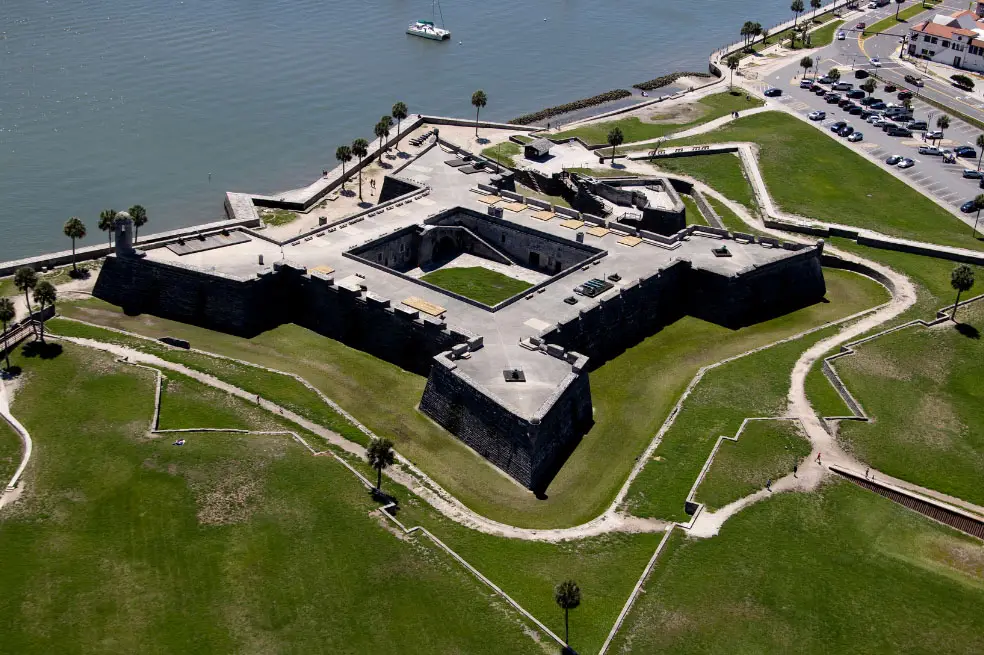
St. Augustine isn’t just any Florida city—it’s America’s oldest continuously occupied European settlement where Spanish Colonial architecture, barrier island beauty, and modern luxury developments create unique palm tree challenges. From the salt-sprayed shores of Anastasia Island to the inland frost of World Golf Village, choosing the right palm requires understanding St. Augustine’s distinct microclimates.
The St. Augustine Challenge: Coastal salt spray within 3 miles of the ocean, winter freezes reaching the low 20s°F every decade, hurricane exposure requiring wind-resistant species, and historic district preservation guidelines affecting landscape choices.
At Iguana Palms, we’ve mastered these exact conditions. Our field-grown, cold-hardy palms thrive from Vilano Beach to World Golf Village, from Colonial Quarter courtyards to Anastasia Island estates.
St. Augustine’s Climate: What You Need to Know
Hardiness Zones
Zone 9b (25-30°F): Coastal areas including Historic District, Anastasia Island, Vilano Beach, St. Augustine Beach, Davis Shores
Zone 9a (20-25°F): Inland areas including West Augustine, World Golf Village, Northwest St. Johns County
Winter Reality:
- Typical lows: 38-48°F
- Hard freezes every 5-7 years: 25-30°F
- Extreme events (once per decade): 20-24°F
- Recent freeze events: 2022, 2018, 2010, 1989 (19°F killed all tropical palms)
St. Augustine’s Key Microclimates
Historic Downtown (Zone 9b): Dense buildings create urban heat island, rarely below 30°F.
Anastasia Island & Beaches (Zone 9b): Ocean moderates temperature (rarely below 28°F) but intense salt spray.
Uptown & North City (9a/9b transition): Victorian neighborhoods, mature tree canopy, 25-30°F freezes.
West Augustine & World Golf Village (Zone 9a): Inland location, less moderation, can reach low 20s°F.
The three best palm trees for St. Augustine
1. Sabal Palmetto: St. Augustine’s Native Champion
Cold Hardiness: 10-15°F | Salt Tolerance: Excellent | Height: 40-50 feet
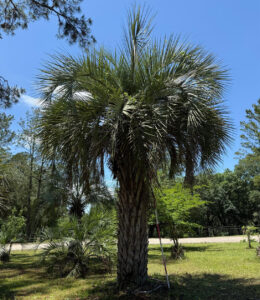
Florida’s state tree is St. Augustine’s perfect palm—historically and horticulturally. When Spanish settlers arrived in 1565, they found Sabal Palmettos dominating the landscape. This palm has weathered 460 years of St. Augustine history, surviving every hurricane, freeze, and drought.
Why Sabal Palmetto Dominates St. Augustine:
- Unmatched Salt Tolerance: The only palm that thrives in direct oceanfront spray on Anastasia Island and Vilano Beach
- Hurricane Proof: Flexible trunks and fan fronds bend but rarely break—survived Matthew, Irma, and Dorian
- Freeze Proof: Survived the 1989 Christmas freeze (19°F) with zero damage
- Historical Authenticity: Perfect for Colonial Quarter and Victorian historic properties
- Native Evolution: Genetically adapted to St. Augustine’s exact conditions
Best St. Augustine Applications: Oceanfront properties (Anastasia Island, St. Augustine Beach, Vilano Beach), Historic District and uptown Victorian homes, commercial properties along US 1 and A1A, any property requiring guaranteed salt and freeze tolerance.
2. Pindo Palm: St. Augustine’s Versatile Residential Favorite
Cold Hardiness: 5-10°F | Salt Tolerance: Moderate-Good | Height: 15-20 feet
The Pindo Palm (Butia capitata) has become St. Augustine’s residential champion. It’s literally freeze-proof in our climate, perfectly sized for typical lots, and features distinctive silvery-blue fronds that create stunning contrast with Southern magnolias and live oaks.
Why Pindo Palms Excel in St. Augustine:
- Absolute Cold Hardiness: Cannot freeze in St. Augustine—survived every recorded cold event including 1989
- Perfect Residential Scale: 15-20 feet won’t overwhelm beach cottages, Victorian homes, or modern subdivisions
- Coastal Tolerance: Excellent for properties 2+ blocks from ocean; handles salt spray well in most St. Augustine locations
- Drought Tolerant: Once established, requires minimal irrigation—ideal for vacation rentals
Best St. Augustine Applications: St. Augustine Beach and Vilano Beach residential (second row and inland), uptown Victorian neighborhoods, World Golf Village communities, courtyard gardens in historic properties, pool landscapes and front yard focal points.
3. Sylvester Palm: St. Augustine’s Statement Palm for Modern Developments
Cold Hardiness: 12-15°F | Salt Tolerance: Moderate | Height: 30-50 feet
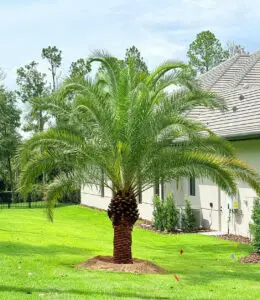
The Sylvester Palm (Phoenix sylvestris) brings Old World elegance with distinctive silver-blue fronds and substantial presence. Perfect for larger properties and modern developments, but requires inland placement away from direct salt spray.
Why Sylvester Palms Work in St. Augustine:
- Architectural Drama: Silver-blue fronds create stunning focal points for estates and commercial properties
- Inland Cold Hardiness: Handles St. Augustine’s typical winters; established specimens survived all freezes since 1989
- Substantial Scale: 30-50 feet ideal for World Golf Village estates, larger Anastasia Island properties, and commercial installations
- Historical Resonance: Mediterranean date palm association complements Spanish Colonial heritage
Best St. Augustine Applications: World Golf Village and golf community estates, inland Anastasia Island properties (1/2+ mile from ocean), West Augustine larger lots, commercial properties along US 1 and SR 16, resort and hotel properties.
Important: Sylvesters should NOT be planted in direct oceanfront locations. Reserve for properties at least 1/2 mile from direct ocean exposure.
The Iguana Palms Advantage
Locally Grown for Northeast Florida: Unlike nurseries shipping from South Florida, we grow palms in Zone 9—the same conditions as St. Augustine. Our palms have survived real Northeast Florida winters, not just theoretical ratings.
St. Augustine Expertise: We know the difference between planting on oceanfront Anastasia Island versus inland World Golf Village. We understand historic district requirements, salt spray patterns by neighborhood, and microclimate variations throughout St. Johns County.
Complete Services:
- Professional installation with one-year warranty
- Site assessment and species recommendations
- Complimentary design visualization services
- We buy oversized palms needing relocation
We Serve: All of St. Augustine and St. Johns County including Historic District, Anastasia Island, St. Augustine Beach, Vilano Beach, World Golf Village, West Augustine, and all coastal and inland communities.Contact Iguana Palms:
Phone: (404) 326-0233
Email: hello@iguanapalms.com
Visit: iguanapalms.com
Frequently Asked Questions
What is the best palm tree for St. Augustine Beach?
Sabal Palmetto for oceanfront properties (superior salt tolerance). Pindo Palm works well 2-3 blocks inland where salt spray is less intense.
Can coconut palms grow in St. Augustine?
No. Coconut Palms cannot survive St. Augustine’s winter temperatures. The 1989 Christmas freeze killed every coconut palm in the region. Choose cold-hardy species instead.
What palm trees survive freezes in St. Augustine?
Cold-hardy palms that reliably survive: Sabal Palmetto (10-15°F), Pindo Palm (5-10°F), Sylvester Palm (12-15°F), Windmill Palm (5-10°F). Avoid Queen Palms, Royal Palms, and Coconut Palms.
How far from the ocean can I plant Sylvester Palms?
At least 1/2 mile from direct ocean exposure. They tolerate occasional salt spray but not constant exposure. For Anastasia Island, choose inland locations west of A1A.
When is the best time to plant palms in St. Augustine?
Best: March-May (spring) and September-October (fall). Acceptable: November-February with irrigation. Challenging: June-August requires intensive watering.