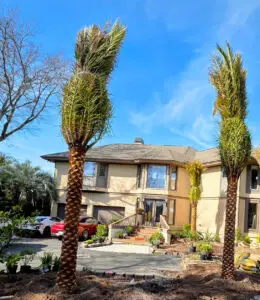
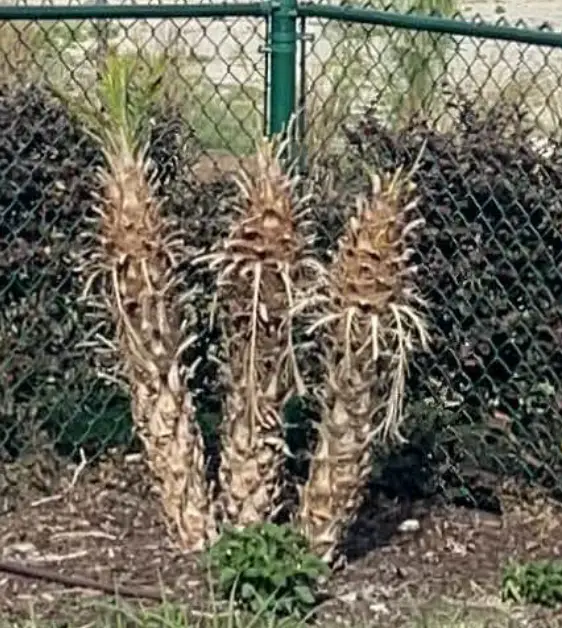
In Central and North Florida, Robellini palms (Phoenix roebelenii), also known as Pygmy Date Palms, are widely planted-and frequently damaged by cold. After a freeze, they turn brown. Some recover slowly over several months. Many do not.
Despite this, Robellinis continue to be installed in large numbers- sold at big-box garden centers and planted in triple-trunk clusters across residential developments from Jacksonville to Ocala to Orlando. The issue is simple: this is a South Florida palm being used in climates where it is not adapted to survive long term.
Robellinis are rated for USDA Zone 10a and higher. They begin taking damage at 30°F are often killed by the hard freezes that occur in Central and North Florida every 5 to 10 years.
The Pindo Palm (Butia capitata) is a more appropriate and reliable long-term choice for these regions, and here we will give you 5 reasons why.
1. The Pindo Palm is North Florida freeze-proof
The Robellini suffers frond damage at 30°F, and can die when temperatures fall into the mid 20’s for more than a few hours. The Pindo Palm is cold-hardy to the teens, well below any recorded temperature in Central and North Florida.
Historical freezes in this Florida area reinforce this need. In January 2026, temperatures near Orlando dropped to 24°F, and the 2010 freeze reached the low 20’s across Central Florida. In 1989, temperatures fell to 19°F in parts of Sumter and Marion counties. Each of these events caused countless losses in Robellini Palms across the state, as documented by UF/IFAS Extension and local post-freeze assessments.
Pindo Palms not only survived these freezes, but they show no evidence of frond damage. In this region, a properly established Pindo Palm will not freeze.
2. Greater Scale and distinctive frond color
Robellinis typically mature at 6 to 10 feet tall, occasionally reaching 12 feet. In Central and North Florida, cold related stress often limits their growth further- making them less of a focal point feature.
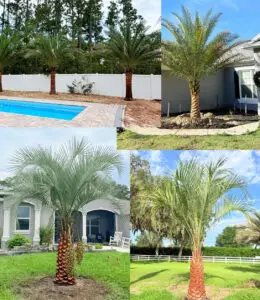
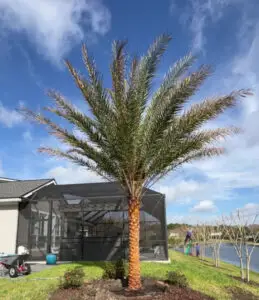
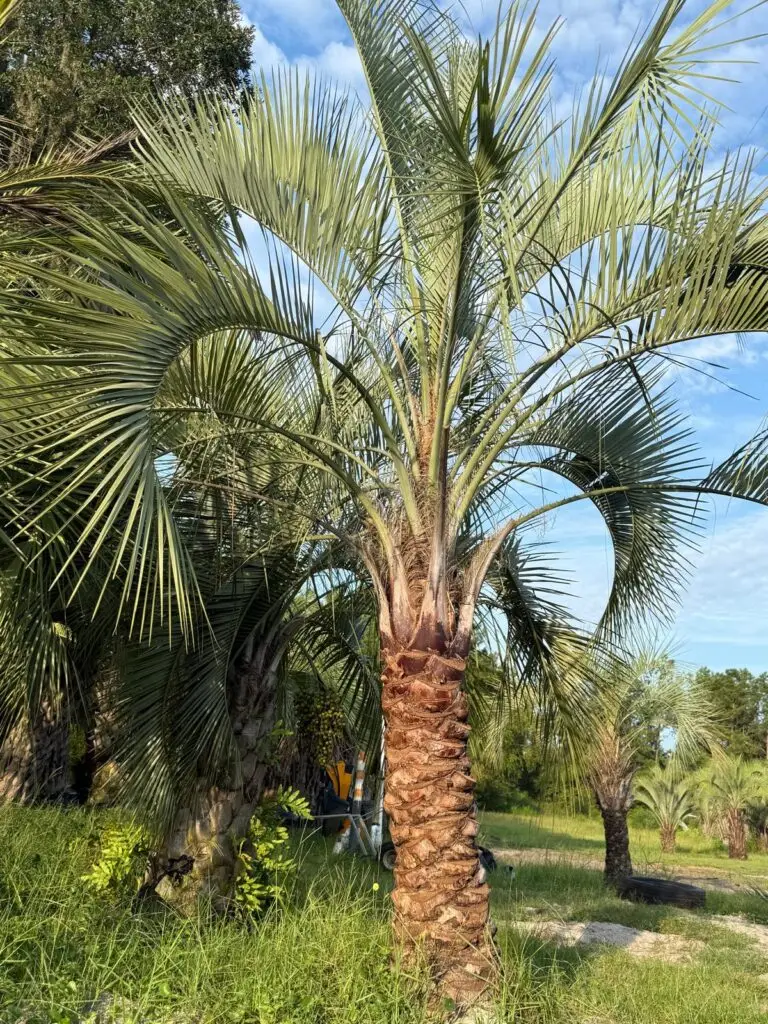
Pindo Palms mature at 15-20 feet with a thick trunk and wide, feathery canopy. It is a strong visual element, great for primary entry placement, without exceeding the scale of a residential lot or interfering with overhead utilities. It is also fantastic near pools, or by pergolas. Its feathery silvery-blue fronds tintroduce a contrast to the greenery that results in a more refined, intentional appearance.
For homeowners seeking the feathered look of a Robellini, but with greater presence and durability, the Pindo is a perfect upgrade.
3. No Hazardous Spines
Robellinis have sharp, rigid spines at the base of each frond. These present a consistent safety concern during maintenance and when planted near walkways, entries or outdoor active areas.
Pindo Palms do not have aggressive spines, so they can be planted anywhere without any caution with spines. Additionally, this makes maintenance more straightforward and can be performed without specialized protection. Pindo Palms are a safer option for families with pets and small children.
4. Edible Fruit
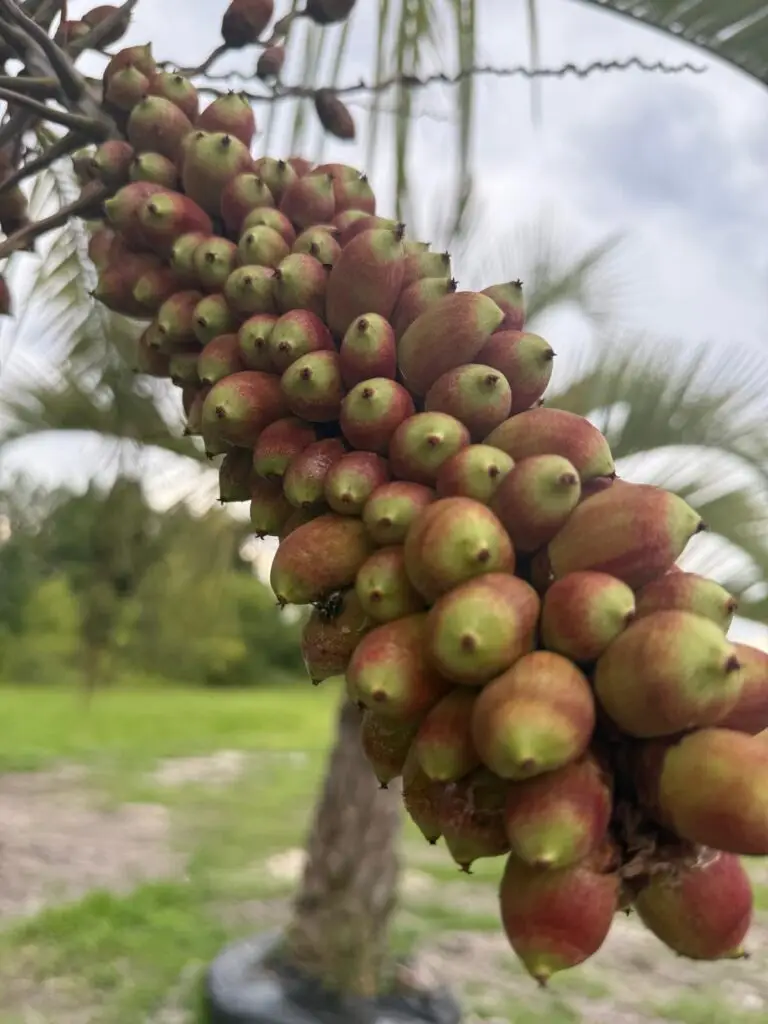
The Pindo Palm produces clusters of orange-yellow fruit with a sweet, tropical flavor- often described as a mix between a banana, pineapple and apricot. The fruit can be consumed fresh or used for jelly, wine, and preserves. Robellinis do not produce edible fruit.
5. Stronger Root system and better storm stability
Robellinis have a relatively shallpw, less stable root system than the Pindo Palm. The shallow roots are an issue in extreme conditions, making them vulnerable during storms and heavy rain events.
The Pindo Palm develops a thicker, more robust root system (without being invasive), that anchors the palm securely in place once established. These strong roots, combined with its heavier trunk and lower center of gravity perform significantly better in wind and saturated soil conditions.
Central and North Florida are known for regular summer storms, heavy rains, and an occasional tropical storm. This added stability matters in this region, making it a more reliable long-term investment in the landscape.
Where can I find high quality Pindo palms to replace my Robellini in Central and North Florida?
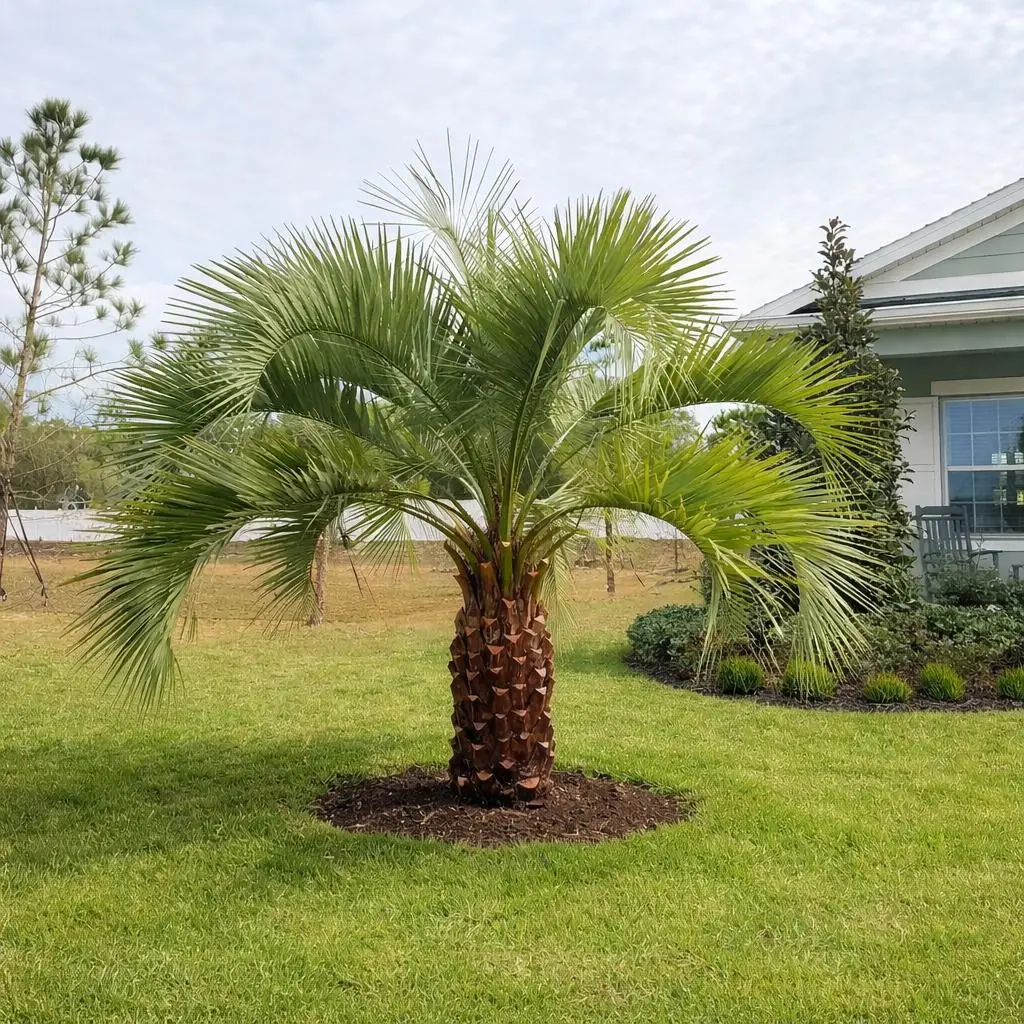
At Iguana Palms, we regularly replace bad-looking or dead Robellinis with properly selected, field grown Pindo Palms. Pindo Palms have become our most popular cold-hardy palm tree from Ocala, to Jacksonville, Tampa and Orlando. It is one of the best upgrades you can make to your yard.
Buying a Pindo Palm from a reputable grower like Iguana Palms, instead of a reseller has its benefits. For starters, our Palms are field grown in North Florida, so they will adapt perfectly and handle freezes and temperature drops without an issue. They have grown in the same climate and conditions they will be planted in. Combined with out expert installation crews and our top-notch maintenance, this dramatically increases long-term performance.
If you are tired of replacing Robellinis year after year, and you are ready for a long term beautiful solution, contact us art Iguana Palms and we will make it happen!