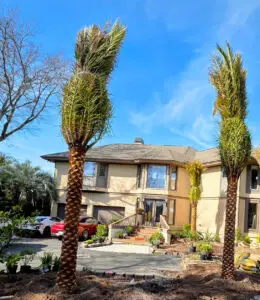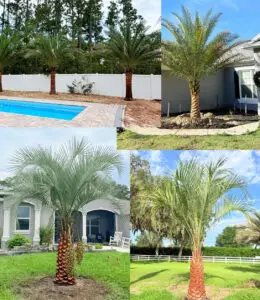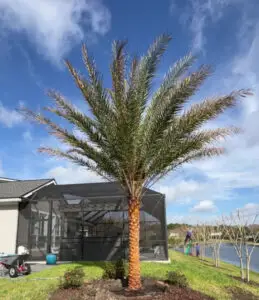

A Timeless Palm with Beauty and Purpose
The Medjool Date Palm, botanically known as Phoenix dactylifera, is one of the most iconic and historically significant palm trees in the world. Revered for thousands of years for both its luxurious appearance and edible fruit, this palm brings a strong, architectural presence to any landscape.
Often associated with desert oases and Mediterranean estates, the Medjool Date Palm delivers a perfect balance of elegance, function, and resilience.
Physical Characteristics
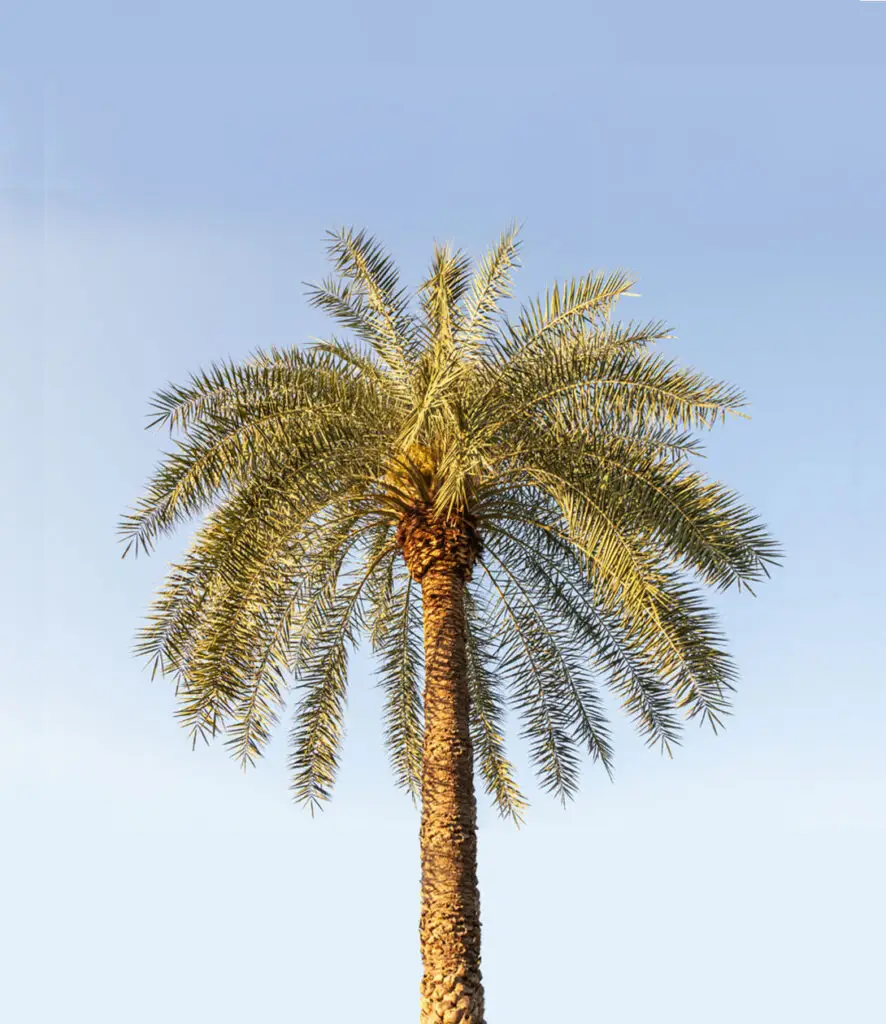
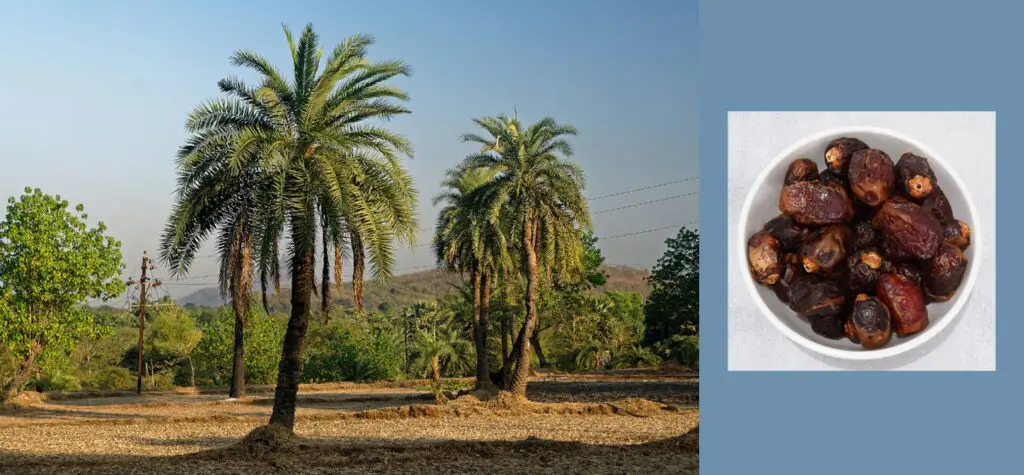
The Medjool Date Palm is a bold, statement-making palm with unmistakable structure. Its canopy forms a full, rounded crown that instantly elevates the look of any space—whether planted as a focal point or lining a grand entry.
- Height: Typically reaches 40-60 feet at maturity
- Canopy Spread: 20-30 feet wide
- Trunk: Thick, textured, and patterned with diamond-shaped leaf scars
- Fronds: Long, arching, feather-style fronds that are deep green to slightly gray-green in color
The Fruit: What Makes “Medjool” so Special
Medjool dates are often called the “king of dates”, and for good reason. They are large, soft, and naturally sweet, have a rich caramel-like flavor, and are hight in fiber, potassium and natural sugars.
Unlike many other date varieties, Medjool dates are typically eaten fresh rather than dried, making them a premium fruit worldwide.
Where to Plant a Medjool Date Palm
This palm thrives in hot, dry climates and loves full sun. It needs to be planted with ample space around it, giving it plenty of room to grow. It is perfect for grand entrances, lining long driveways, poolside landscapes and resort-style gardens.
- USDA Zones: 9-11
- Sun: Full sun (essential for healthy growth and fruiting)
- Soil: Well-draining, tolerantes sandy soils well
- Water: Moderate- drought tolerant once established.
Climate, Cold and Wind Tolerance
- Heat Tolerance: High
- Wind Resistance: Moderate
- Cold Tolerance: mild- can handle brief drops under 30°F, but extended cold can damage fronds and slow growth.
Care and Maintenance for Medjool Palms
Despite their luxurious look, Medjool Date Palms are relatively manageable.
- Pruning: Remove dead fronds as needed
- Fertilization: Palm-specific fertilizer 2-3 times per year
- Irrigation: Regular watering when young, and reduce as it gets established
- Pest/Disease: Generally hardy, but may have issues with scale or fungus in humid climates
- Fruiting: Expect fallen dates that can create a mess- some homeowners choose to remove fruit stalks early to prevent the mess.
Landscape Use and Design Impact
The Medjool Date Palm brings a strong vertical and sculptural element to any design.
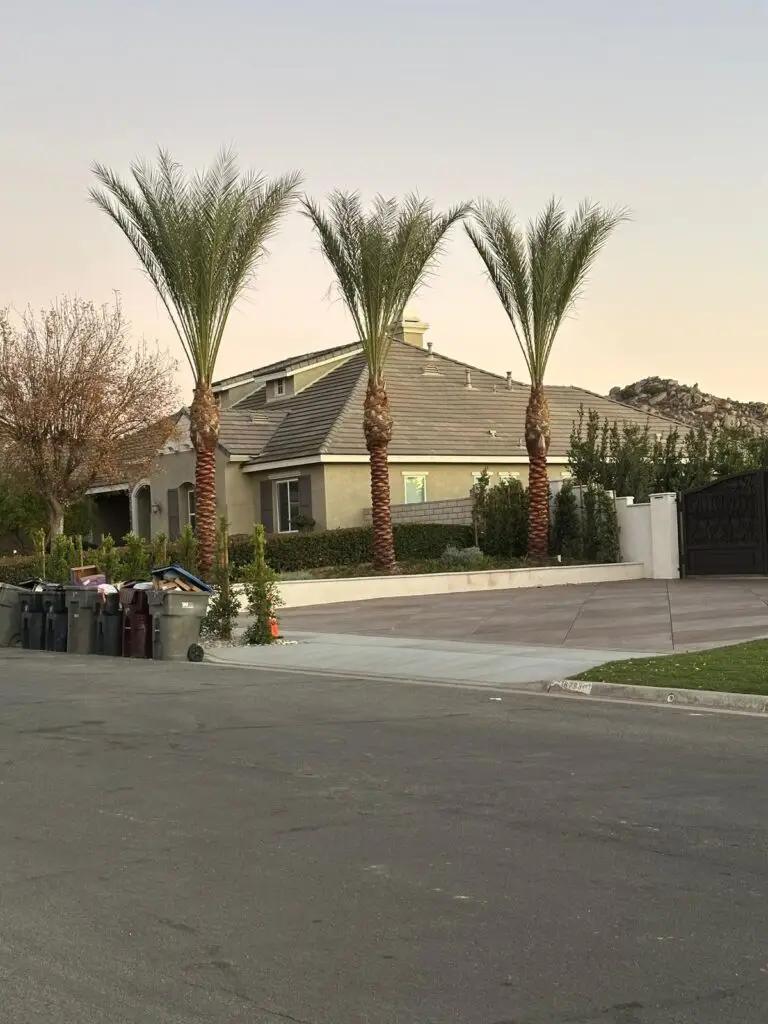
It works beautifully as a standalone focal point, paired entry statement and formal avenue planting. Its bold trunk and symmetrical canopy give it a high-end, resort-like feel that few trees can match.
Final Thoughts
The Medjool Date Palm is more than just a tree—it’s a living piece of history, a food source, and a design statement all in one.
If you have the space and the right climate, it offers timeless beauty, functional value, and priceless charm.