
The jewel of the garden
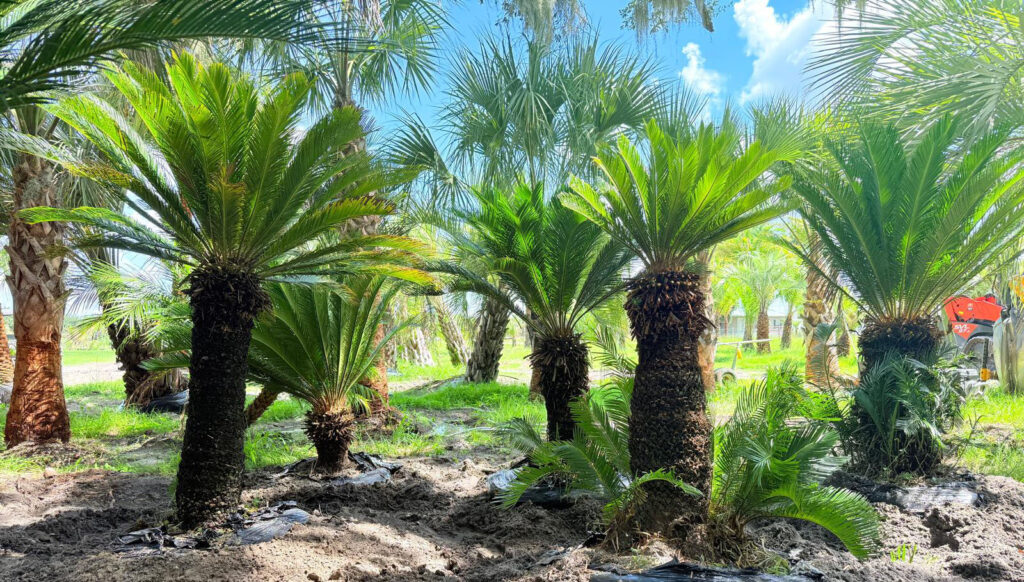
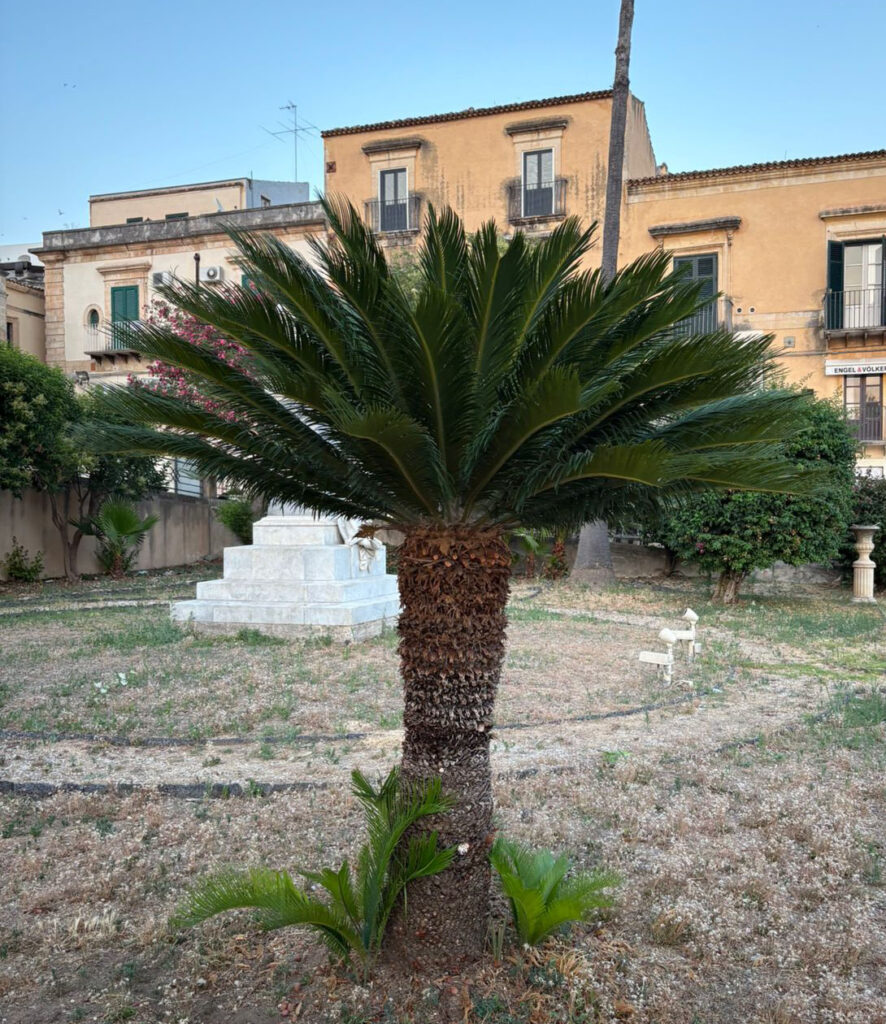
Cycas revoluta, commonly known as the King Sago Palm, isn’t actually a palm, it’s a cycad. Cycads are one of the most ancient plant lineages on Earth, dating back to the time of the dinosaurs. The King Sago is commonly called King Sago Palm because its trunk and crown resemble a miniature palm tree.
Native to Japan, the King Sago is considered a living fossil, having remained virtually unchanged for millions of years. This plant is often planted near temples and royal compounds, symbolizing longevity, beauty and resilience.
Physical Qualities
King Sagos grow in a tight rosette and form a symmetrical crown of stiff, feather-like leaves. The deep green leaves are glossy, leathery and arch outward with elegance. Over time, the plant develops a thick, woody trunk and can reach heights of up to 6 to 10 feet when fully mature.
Their slow growth rate makes them an excellent choice for container planting, patios, and accent garden features- especially in landscapes that call for structure and permanence.
General Care and Planting Tips
King Sagos thrive in warm, Mediterranean-like climates where summers are hot and winters are mild. They grow best in USDA zones 8b-11. If planted in 8a, we suggest planting in a container so it can be moved indoors during hard frosts.
Soil and Water Requirements
- Prefer well draining sandy or loamy soil
- Drought-tolerant once established
- Avoid overwatering, and make sure soil has proper drainage- especially if in containers
Best Planting locations
- Patios & courtyards
- Poolside landscapes
- Indoor atriums or sunrooms
- Companion planting with palm trees (they wont compete in height)
- As indoor plants
- In asian inspired or minimalist bonsai-style garden
Are King Sagos cold-hardy?
Yes, King Sago Palms are considered cold-hardy once established. Mature specimens can tolerate temperatures as low as 15°F. When younger or newly planted, they may need additional protection during hard frosts.
If you are expecting a freeze:
- Cover the crown with burlap or frost cloth to protect the leaves from cold winds
- Apply a leaf protectant spray to strengthen the leaves
- Place mulch around the base of the trunk to create insulation for the roots
- Move potted plants indoors if in containers.
How fast do King Sago Palms grow?
Very slowly, which is what makes them such a jewel in the garden.
King Sagos typically grow 1-2 inches per year and produce only one flush of new fronds annually, usually in the spring or summer. Because of this, they are often prized as long term statement plants rather than a fast growing filler. Their slow, steady development ensures a sculptural, well formed look that only improves with time.
Which size King Sago should I buy?
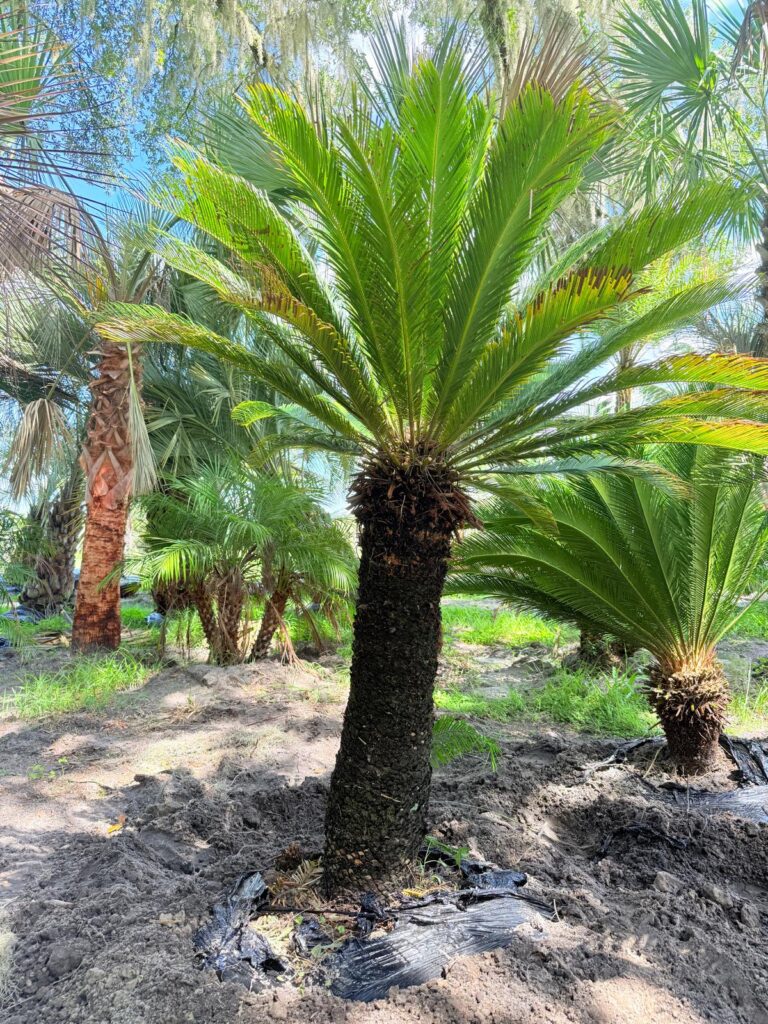
The right size depends on your space and goals, as well as your budget. Although many plants can be bought at a small size and grow quickly, the King Sago is not one of these. For this specific reason, we recommend you buy the biggest possible size you can find and afford, as it is a great investment if you are seeking instant structure and maturity.
Where can I find a large King Sago near me?
King Sagos can be found in most garden centers and home improvement stores, most of the time they come in small sizes, which make great tabletop houseplants! If you are in the market for a larger specimen, look no further than Iguana Palms, where we offer only mature, high-quality King Sago palms, delivery and installation included.
Final Thoughts
Whether you are looking for a main plant for a courtyard, or a low maintenance container plant, the King Sago is a great choice. It offers timeless elegance and durability, with very little maintenance requirements. While its slow growth rate requires patience, choosing a mature specimen gives you instant beauty and a miniature palm-like sculptural structure.