Creating World-Class Landscapes in Central Florida
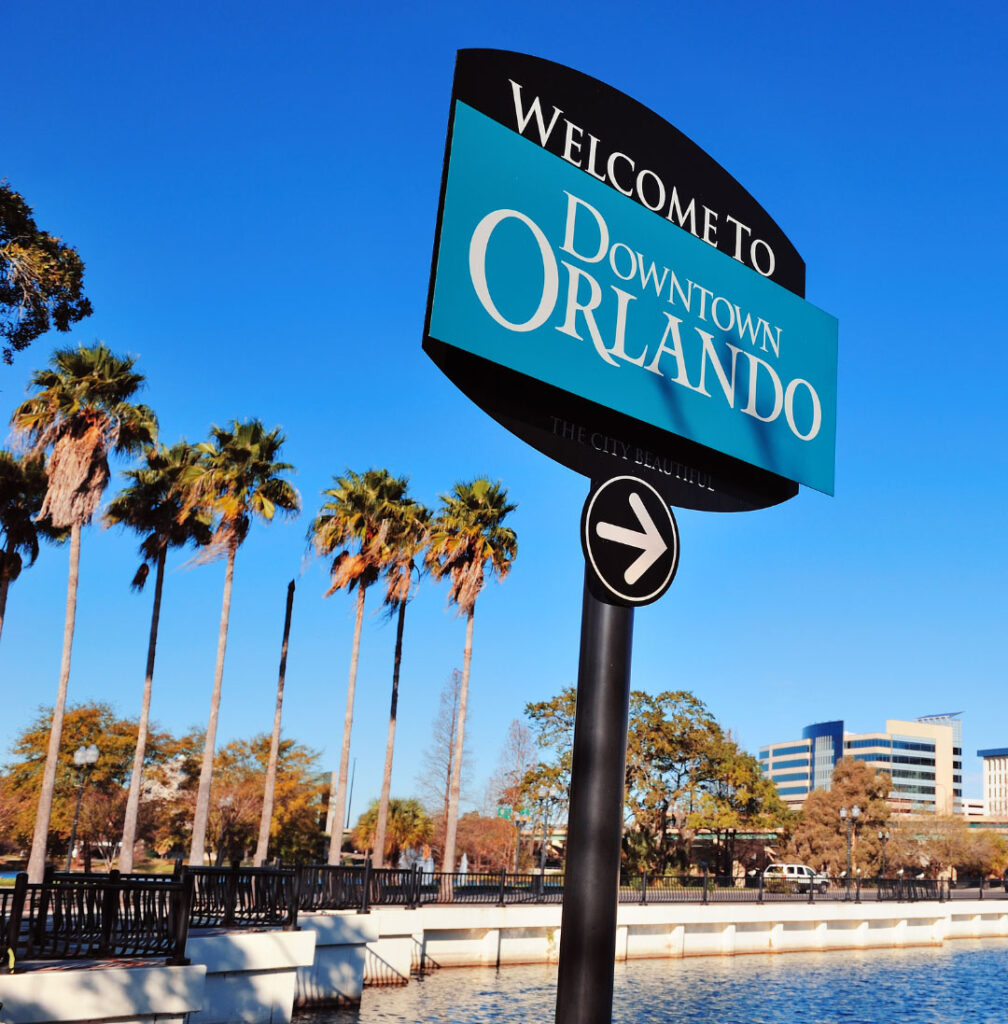
Orlando isn’t just another Florida city – it’s a global destination where landscape perfection is the standard. From the meticulously maintained theme parks that welcome millions annually to the luxury golf communities surrounding world-class resorts, from the historic brick streets of Winter Park to the modern sophistication of Lake Nona, palm trees define our Central Florida identity.
But creating landscapes that meet Orlando’s standards requires understanding its unique position.
Orlando is located in Zone 9b, warm enough for lush tropical aesthetics yet cool enough that occasional winter
freezes separate properly selected palms from expensive mistakes. Orlando has a strong tourist-driven economy where first impressions are everything, and size matters. Supporting a booming residential market where property values reflects landscape quality, and the weather may fluctuate between intense summer heat, thunderstorms as well as rare but memorable freezes.
At Iguana Palms, we specialize in various sized field-grown, cold-hardy palms that excel in Orlando’s demanding conditions. Our locally-acclimated specimens thrive from Winter Park to Windermere, from Lake Nona to Celebration, from Dr. Phillips to the Convention Center corridor – because they’re grown for Central Florida conditions, not shipped from distant tropical climates where they’ve never experienced cold.
Understanding Orlando’s unique Palm-growing climate
Zone 9b: Orlando’s Climate Profile
- Average minimum winter temperatures: 25-30°F
- Covers: All of metro Orlando, Winter Park, Maitland, Lake Nona, Dr. Phillips, Windermere, Clermont, Winter Garden, Ocoee, Apopka
- Challenge: Occasional hard freezes every 5-10 years that devastate tropical species
- Advantage: Warm enough for beautiful palm growth, predictable enough for reliable species selection
Orlando’s memorable cold events
- January 2010: The modern benchmark – temperatures hit mid-20s throughout metro Orlando, devastating unprepared landscapes from theme parks to residential communities.
- December 1989: Legendary freeze reached low 20s, devastating tropical landscapes.
- January 2018: Brief sharp cold snap reminded newer Orlando residents why cold hardiness matters.
- January 2022: Extended cold period tested palm selections throughout Orange County.
These events separate wise investments from costly mistakes. Tropical species like royal palms, coconut palms, and Adonidia palms (also known as Christmas Palms)- all common in South Florida. For homeowners, developers, and landscape professionals throughout metro Orlando, these freeze events underscore a critical truth: cold-hardy palm selection isn’t optional – it’s essential.
Orlando’s unique landscape factors
The Theme Park Standard
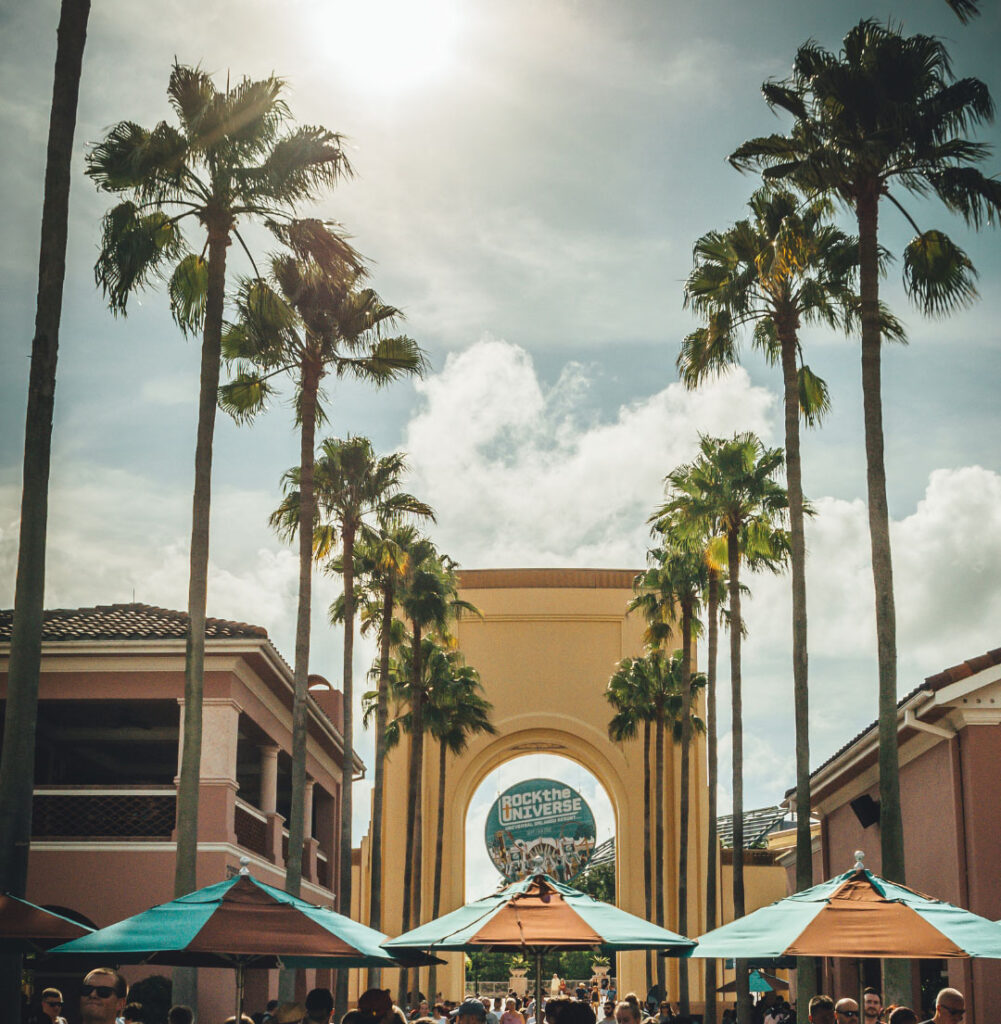
Orlando’s theme parks maintain some of the world’s most impressive landscapes. Millions of visitors judge
Orlando’s beauty by these meticulously maintained standards. While residential and commercial properties don’t need theme park budgets, they compete in a market where landscape expectations are extraordinarily high.
Cold-hardy palms help meet these expectations affordably. They provide the tropical Florida aesthetic visitors
expect while requiring far less maintenance than the elaborate plantings theme parks can afford.
Summer Thunderstorm Season
Orlando’s afternoon thunderstorms are legendary – intense rainfall, dramatic lightning, and gusty winds nearly
daily from June through September. Palms need wind resistance to survive and thrive in these conditions.
Properly selected cold-hardy species like Sabal Palmetto bend dramatically during storms but rarely break or
uproot.
Lake Effect Microclimates
Orlando’s countless lakes create localized microclimates. Properties near Lake Eola, the Butler Chain of Lakes
around Windermere, or any of the numerous lakes throughout Winter Park, Lake Nona, and Dr. Phillips often
experience slightly moderated temperatures. These waterfront properties occasionally can push the boundaries of cold hardiness, though conservative species selection remains wise.
Sandy Soil
Like most of Florida, Orlando’s sandy soil drains quickly but lacks organic matter and nutrients. This affects
palm establishment and long-term health. Proper soil amendment at planting separates thriving palms from
struggling specimens.
Urban Heat Islands
Downtown Orlando, the Convention Center corridor, International Drive, and dense commercial areas along
major thoroughfares experience elevated temperatures from concrete and asphalt. These urban heat islands
create microclimates several degrees warmer than surrounding areas, affecting both summer heat stress and
winter cold protection.
Your Top Three Foundation Palms for Orlando
1. Sylvester Palm: Orlando’s Signature Luxury Statement
Cold Hardiness: 12-15°F | Salt Tolerance: Moderate | Height: 30-50 feet |
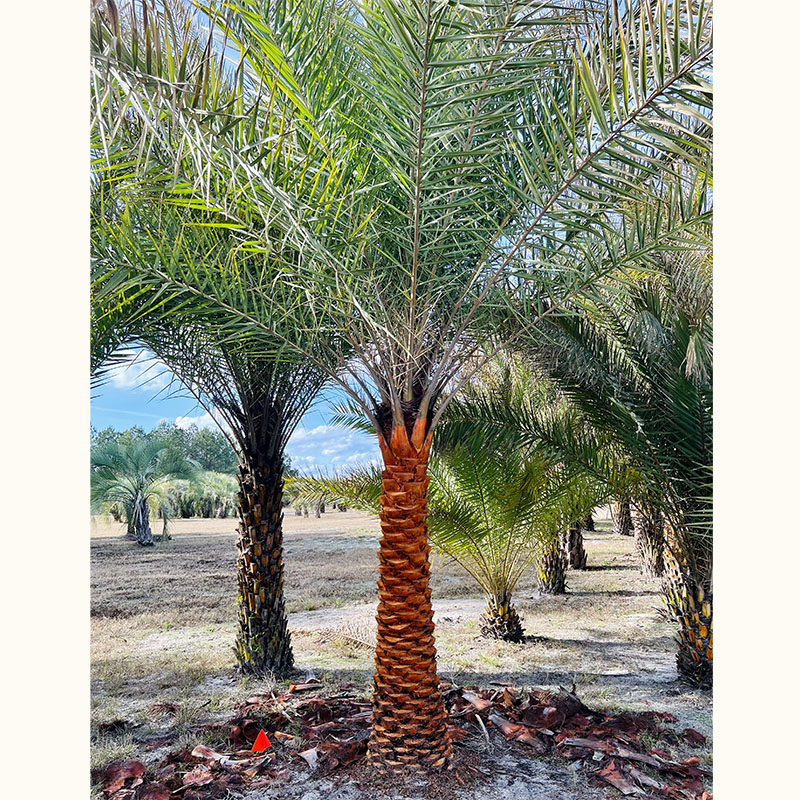
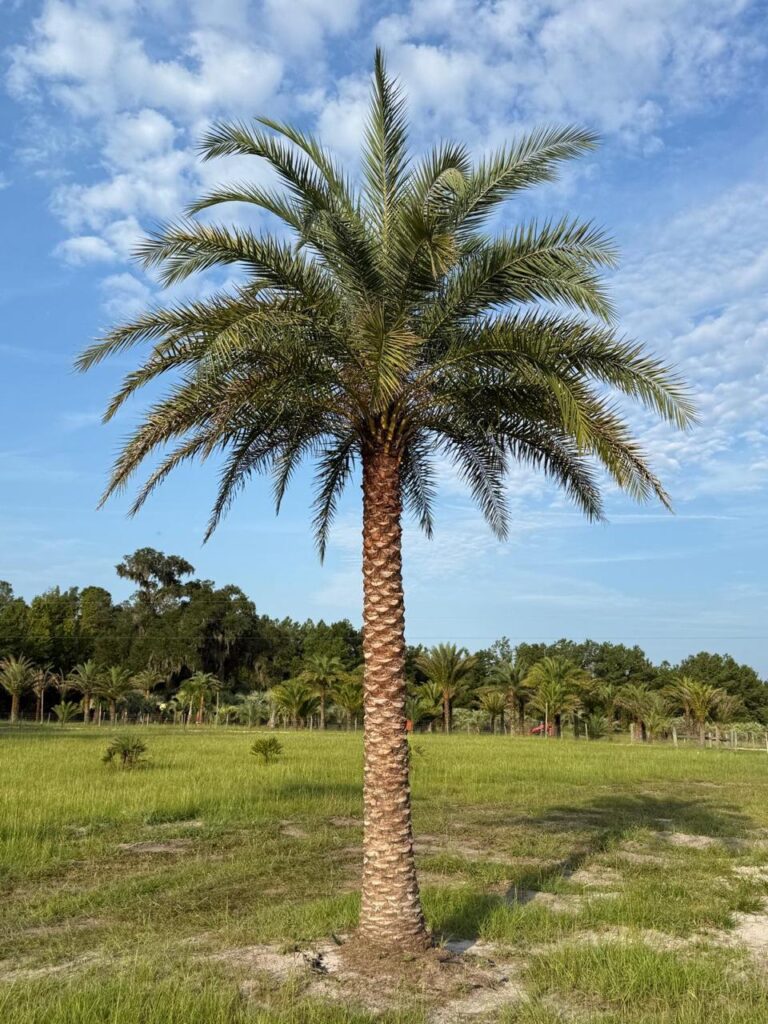
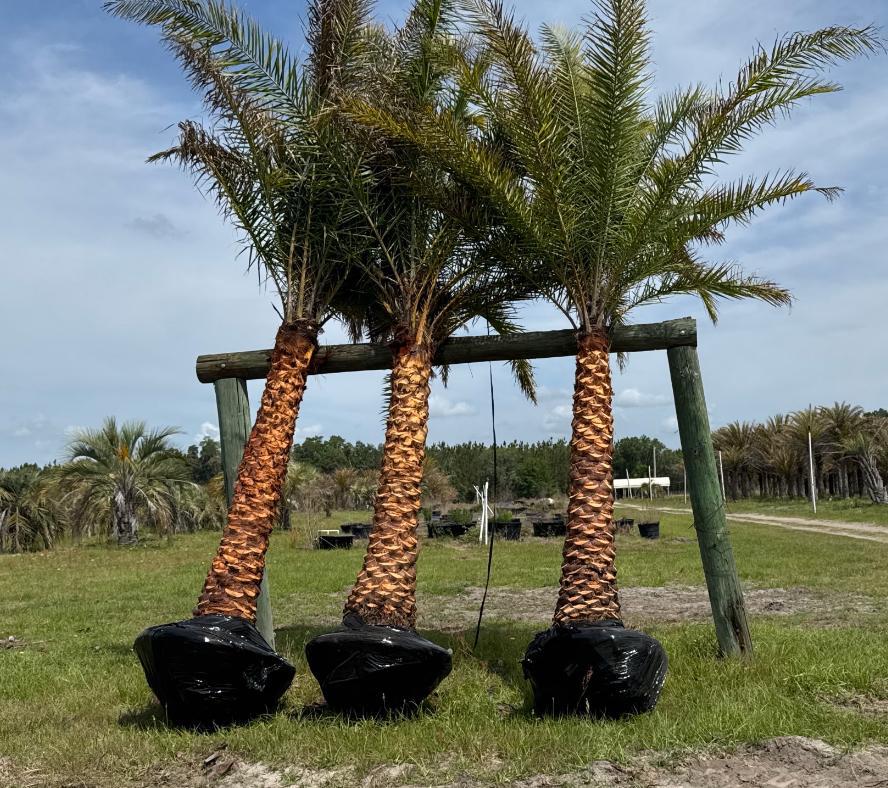
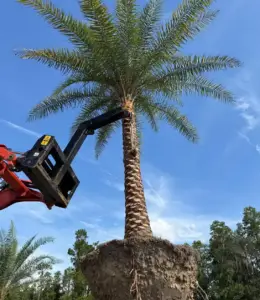
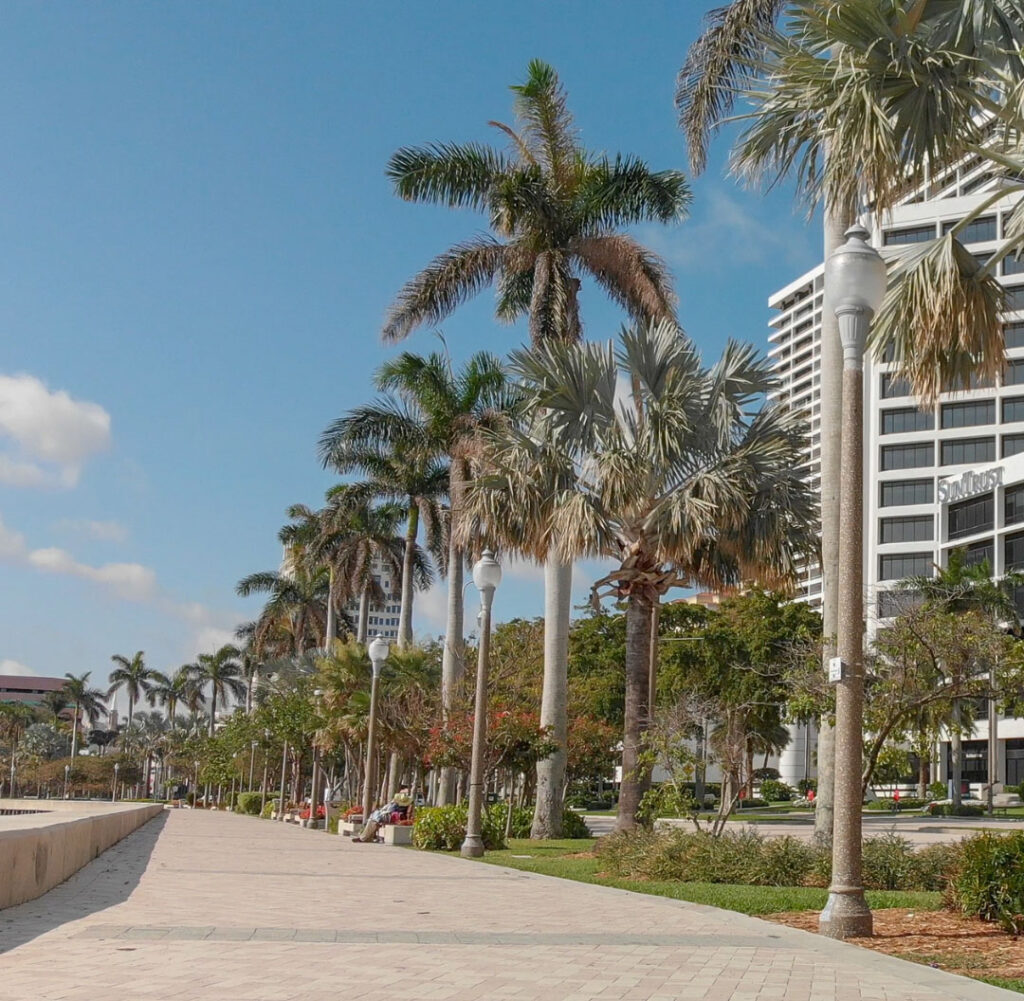
The Sylvester Palm (Phoenix sylvestris) has become synonymous with Orlando’s luxury landscape market. Drive through Windermere’s estate communities, Lake Nona’s modern developments, Winter Park’s historic
neighborhoods, or Dr. Phillips’ golf course communities, and you’ll see why: these majestic blue-gray beauties
create perfect tropical elegance while maintaining the substantial, refined presence Orlando’s sophisticated
market demands
Why Sylvester Palms Thrive in Orlando: Perfect Climate Match: Orlando’s Zone 9b climate is ideal for Sylvesters. Our winters are mild enough for vigorous growth, yet occasional cold snaps remain well within their 12-15°F tolerance range. Established Sylvesters breezed through 2010, 2018, and 2022 without damage – a critical consideration for the substantialinvestment these palms represent.
Theme Park Quality for Residential Budgets: Sylvester palms provide the sophisticated, meticulously maintained appearance Orlando’s theme parks have made standard, but with residential-appropriate maintenance requirements. They look expensive and carefully curated while requiring relatively modest care.
Architectural Versatility: The silvery-blue fronds complement Orlando’s diverse architecture – from
Mediterranean Revival in Winter Park to contemporary modern in Lake Nona, from classic Florida ranch styles
throughout Dr. Phillips to luxury custom homes in Windermere and Isleworth.
Scale and Presence: At 30-50 feet mature height, Sylvesters provide substantial presence appropriate for
Orlando’s larger residential lots and estate properties. They’re investment palms that significantly enhance
property values in Orlando’s competitive real estate market.
Best Orlando Applications:
- Luxury Communities: Perfect for Windermere, Isleworth, Lake Nona, Dr Phillips estates.
- Golf Course Properties: Ideal for Bay Hill, Interlachen, Dubsdread, MetroWest communities.
- Winter Park Estates: Stunning specimens for historic luxury Winter Park properties.
- Downtown/Thornton Park: Urban sophistication for downtown Orlando’s residential revival.
- Baldwin Park: Contemporary elegance for this master planned community.
- Celebration: Statement palms matching this community’s architectural standards.
- Resort Corridors: Professional impact near Convention Center, Universal Studios and Disney areas.
Our Exceptional Sylvester Collection
At Iguana Palms, we cultivate extraordinary Sylvester palms that transform Orlando properties from beautiful to unforgettable. We have rare double trunk Sylvesters, and exceptionally large specimens. These palms are absolutely stunning focal points perfect for creating signature entrances in Windermere estates, Lake Nona
showcase homes, or Winter Park historic properties. We maintain only a select few at any time, making these
true collector’s palms for Orlando’s luxury market.
2. Sabal Palmetto: Orlando’s Bulletproof Native
Cold Hardiness: 10-15°F | Salt Tolerance: Excellent | Height: 40-50 feet |
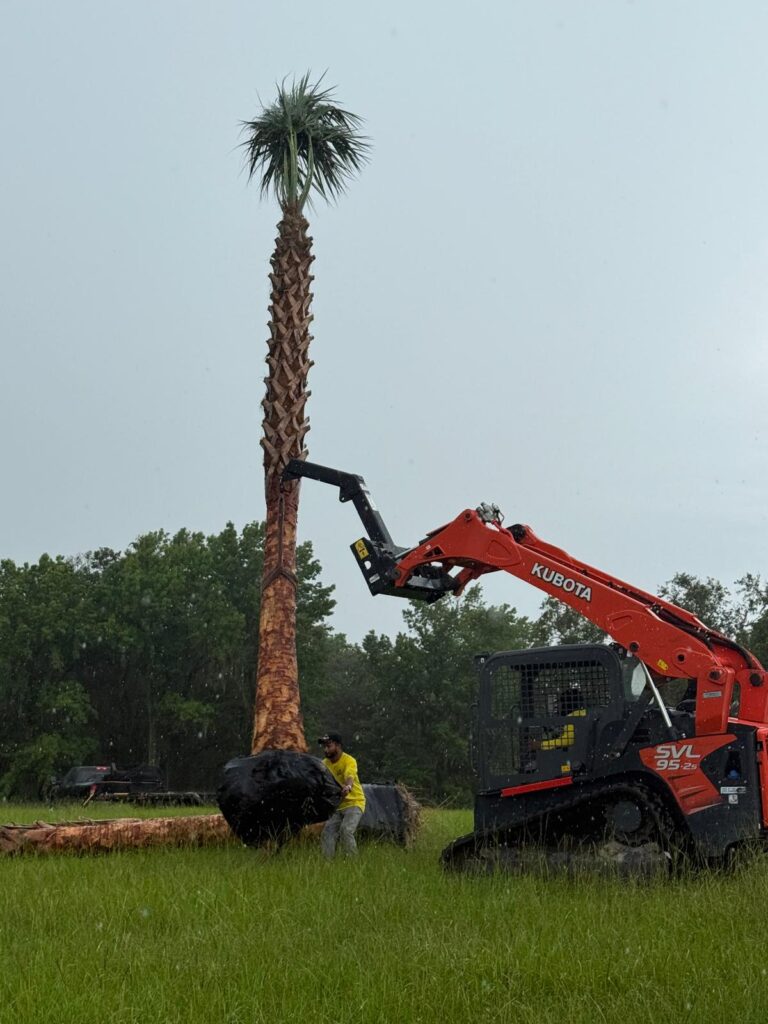
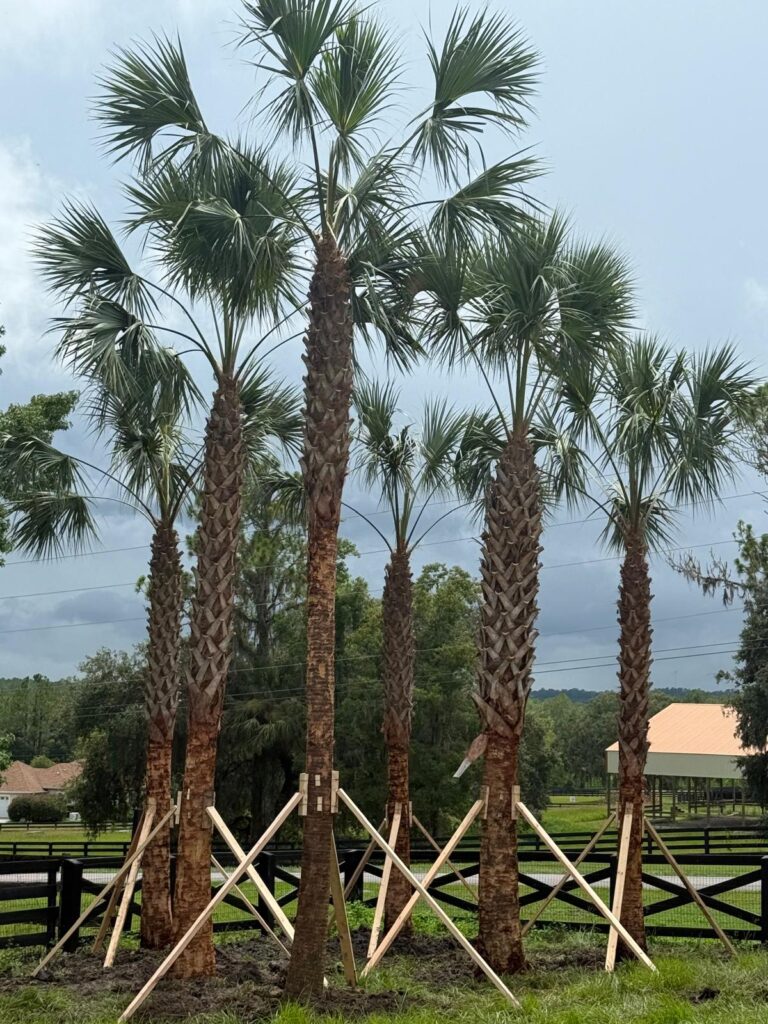
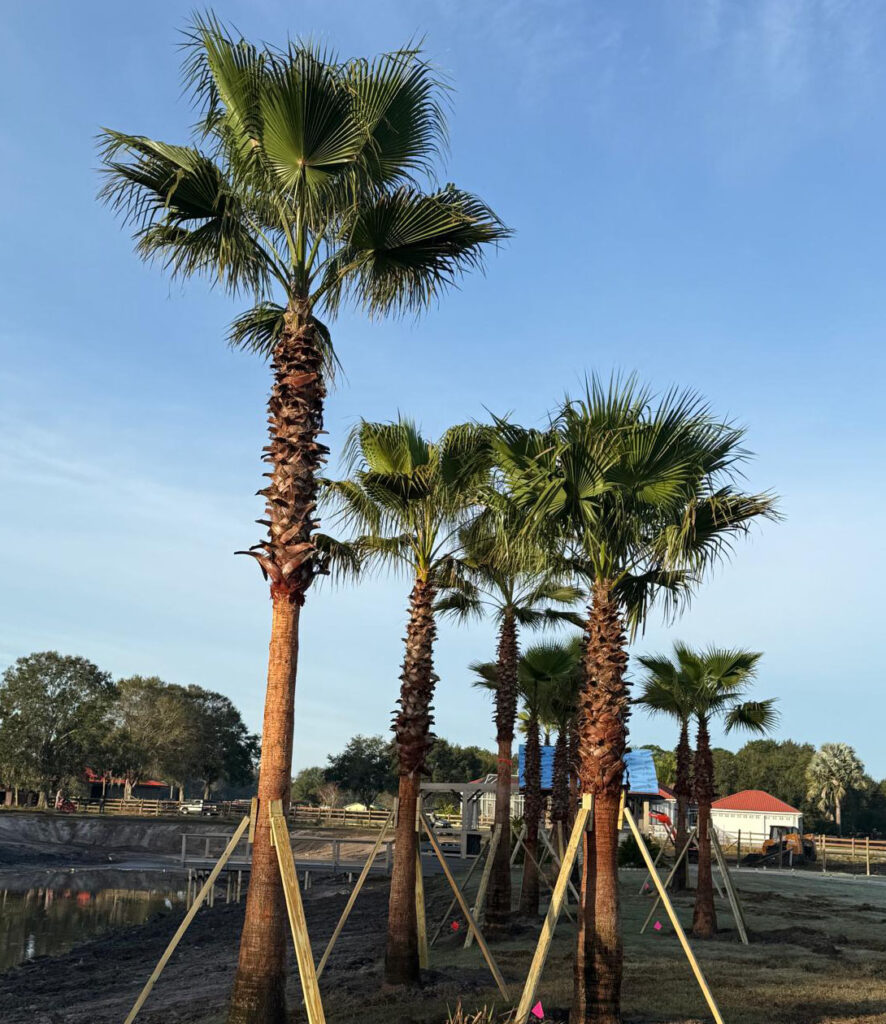
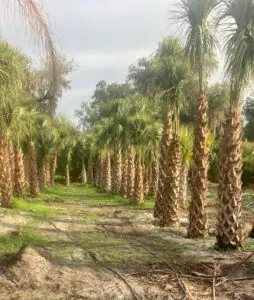
The Sabal Palmetto is Florida’s state tree, and it performs spectacularly throughout Central Florida. Native to
our region, this palm has survived every freeze, hurricane, and challenge Orlando’s climate has delivered for
millennia. It’s the palm that makes sense everywhere from downtown Orlando to Clermont’s hills.
Why Sabal Palmetto Excels in Orlando: Native Advantage: Sabal Palmetto evolved in Central Florida. It’s genetically adapted to Orlando’s sandy soil, seasonal weather patterns, native insects, and temperature extremes. When you plant a Sabal in Orlando, you’re working with 10,000 years of evolutionary adaptation, not fighting it.
Storm Survival Champion: Orlando sits inland enough to avoid worst hurricane impacts but still experiences
tropical storms and severe thunderstorms regularly. Sabal Palmettos have survived every storm in Orlando’s
history. Their flexible trunks and fan-shaped fronds bend dramatically during summer thunderstorms but almost never break or uproot.
Absolute Cold Hardiness: With tolerance to 10-15°F, established Sabal Palmettos laugh at Orlando freezes.
They survived 1989, 2010, 2018, and 2022 without a single brown frond – the ultimate insurance policy for
Orlando’s occasional hard freezes.
Zero-Maintenance Reliability: Once established, Sabal Palmettos need almost no care. Critical for Orlando
homeowners balancing busy schedules, investment property owners maintaining multiple properties, and
commercial properties managing tight maintenance budgets.
Drought Champion: Orlando’s dry spring season stresses many landscape plants. Established Sabal Palmettos sail through dry periods without supplemental irrigation – increasingly important with water restrictions.
Best Orlando Applications:
- Street Trees: Perfect for Baldwin Park, Celebration, Winter Garden, Avalon Park neighborhoods
- Natural Areas: Ideal for properties backing to conservation areas throughout Orlando
- Historic Neighborhoods: Authentic for Winter Park, College Park, Thornton Park, Colonialtown
- Commercial Properties: Reliable choice for Convention Center area, International Drive, business parks
- Large Estates: Excellent for Windermere, Dr. Phillips, and Lake Nona acreage properties
- Public Spaces: Used extensively by City of Orlando for parks and streetscapes
Orlando Heritage:
Sabal Palmetto has deep roots in Orlando’s history. Early Orlando pioneers used Sabal trunks for construction.
Today, mature Sabals grace Lake Eola Park and Orlando’s most prestigious addresses, from Winter Park’s
historic avenues to Windermere’s lakefront estates.
3. Pindo Palm: Ideal For Orlando Homes
Cold Hardiness: 5-10°F | Salt Tolerance: Moderate-Good | Height: 15-20 feet |
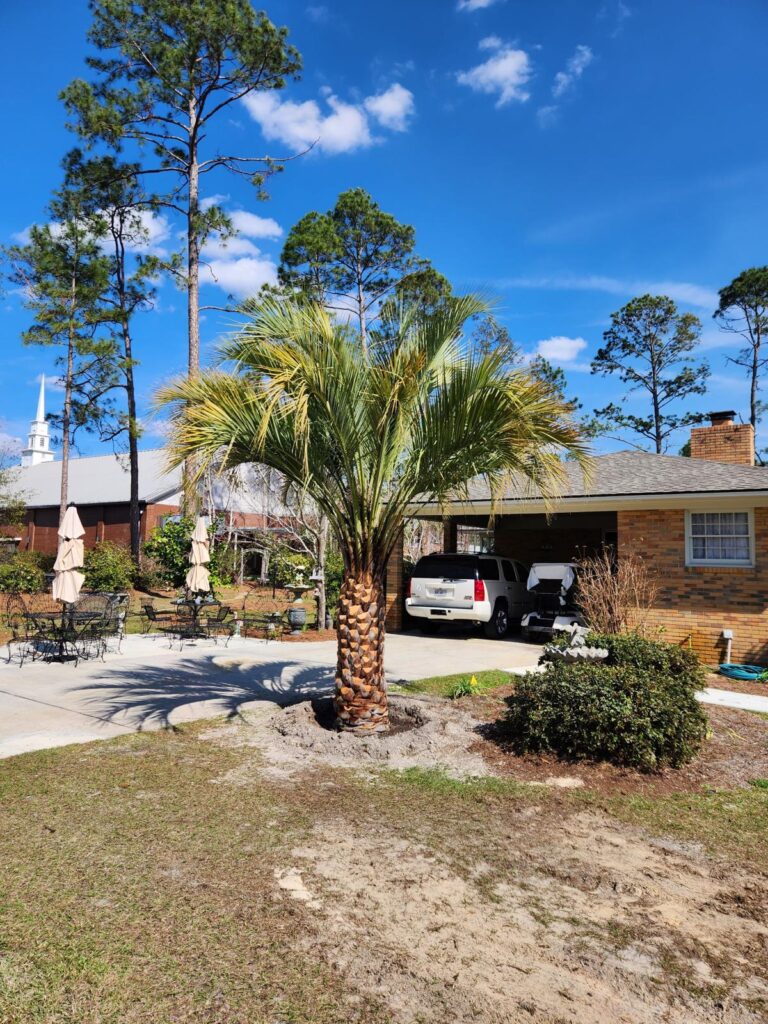
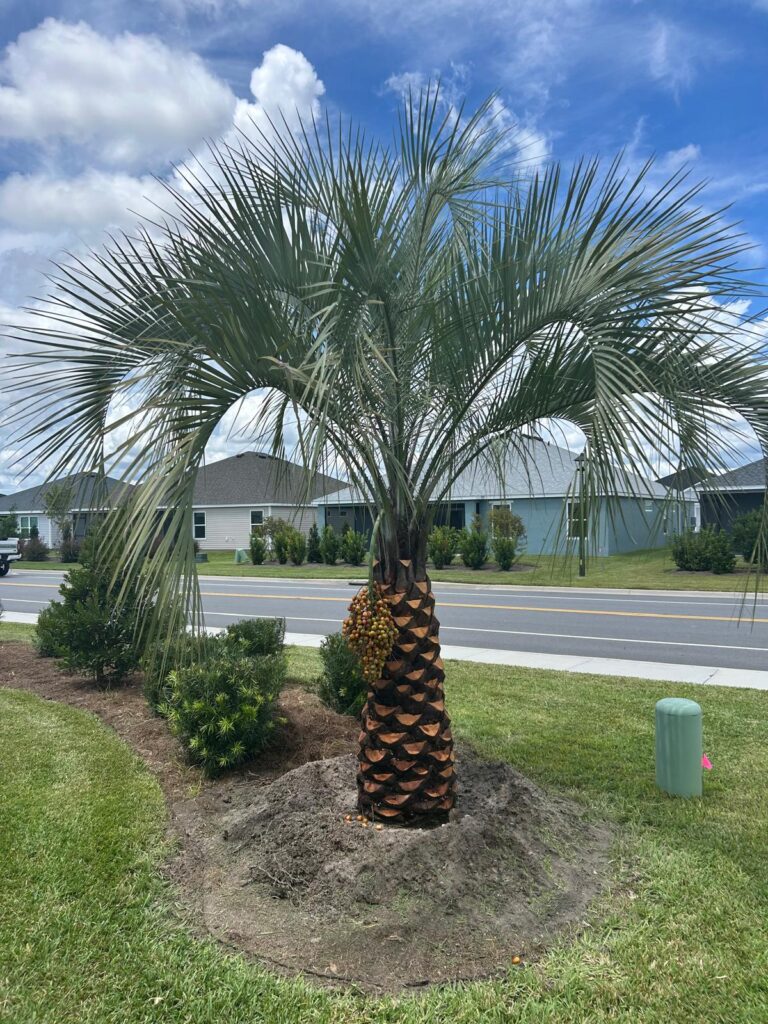
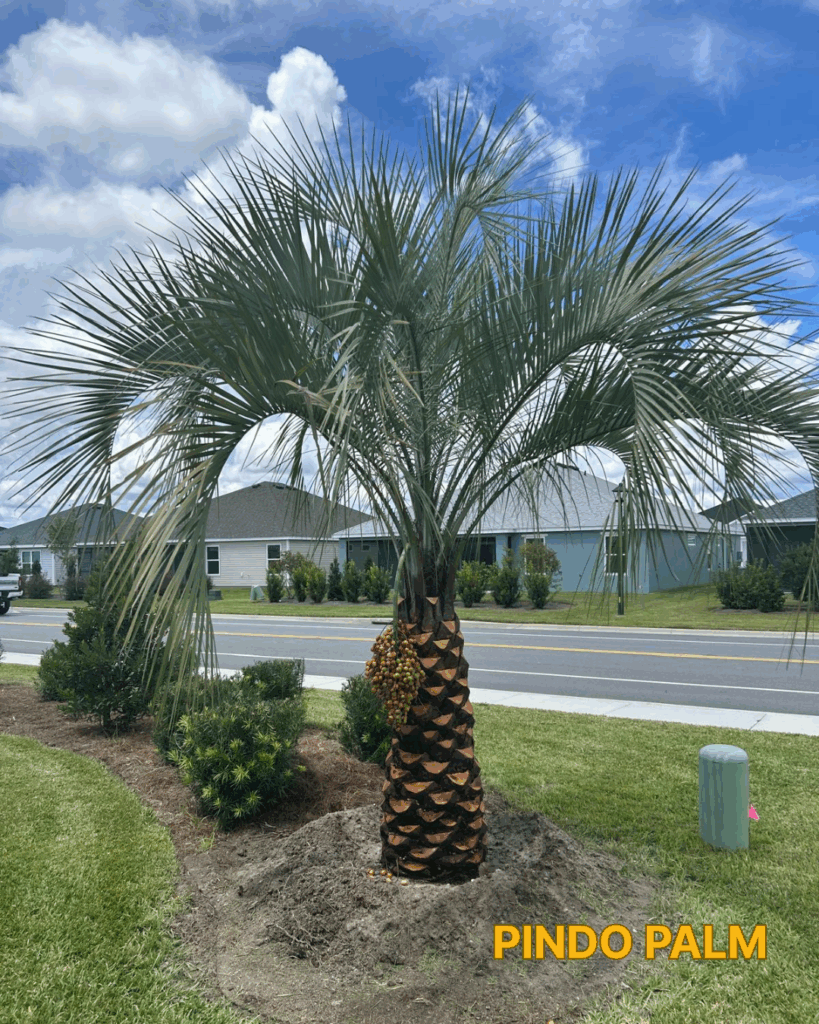
The Pindo Palm (Butia capitata) has become Orlando’s residential favorite for compelling reasons. Its
manageable size fits perfectly with typical Orlando lot sizes, its extreme cold hardiness provides absolute
security against any possible Orlando freeze, and its distinctive blue-gray beauty complements Central Florida’s architectural styles beautifully.
Why Pindo Palms Dominate Orlando’s Residential Landscape
Cold Hardiness: 5-10°F | Salt Tolerance: Moderate-Good | Height: 15-20 feet | Ideal for Orlando Homes
The Pindo Palm (Butia capitata) has become Orlando’s residential favorite for compelling reasons. Its managable size fits perfectly with typical Orlando lot sizes, and its extreme cold hardiness provides absolute security against any possible Orlando freeze. Its distinctive blue-gray beauty complements Central Florida’s architectural style beautifully.
Why Pindo Palms Dominate Orlando Residential Landscapes:
Absolutely Freeze-Proof: With tolerance to 5-10°F, Pindo palms cannot freeze in Orlando under any circumstances. Even the catastrophic 1989 event didn’t phase them. For Orlando homeowners, this represents zero-risk palm selection.
Perfect Orlando Scale: At 15-20 feet mature height, Pindo palms fit beautifully in Orlando’s residential neighborhoods. They won’t grow into power lines along the oak tree lines streets in Winter Park or College Park, and wont overwhelm typical ranch homes throughout Dr. Phillips and MetroWest.
Distinctive Beauty: The silvery-blue fronds create stunning contrast with Orlando’s abundant Southern magnolias, live oaks, and azaleas. They are particularly beautiful when paired with the deep greens commonly used in Central Florida Landscapes.
Pool Perfect: Orlando’s pool friendly climate means properties often have pools, and Pindo Palms provide a tropical atmosphere without excessive debris or growing too large, making them perfect for neighborhoods where pools are standard.
Best Orlando Applications:
- Residential Front Yards: Perfect throughout College Park, Audubon Park, Baldwin Park, Avalon Park, Lake Nona.
- Pool Landscapes: Ideal for pools throughout metro Orlando.
- Mixed Plantings: Combines beautifully with tropical and traditional Southern plantings.
- Winter Park Properties: Right scale for historic homes and newer developments.
- Corner Lots: Provides impact without blocking sight lines- important for traffic safety.
- Urban Properties: Works well in smaller yards in Thornton Park, downtown Orlando, Mills 50
Our Museum-Quality Pindo Collection:
This is where Iguana Palms truly distinguishes itself in the Orlando market. We specialize in exceptional Pindo Palm specimens that elevate properties from ordinary to extraordinary:
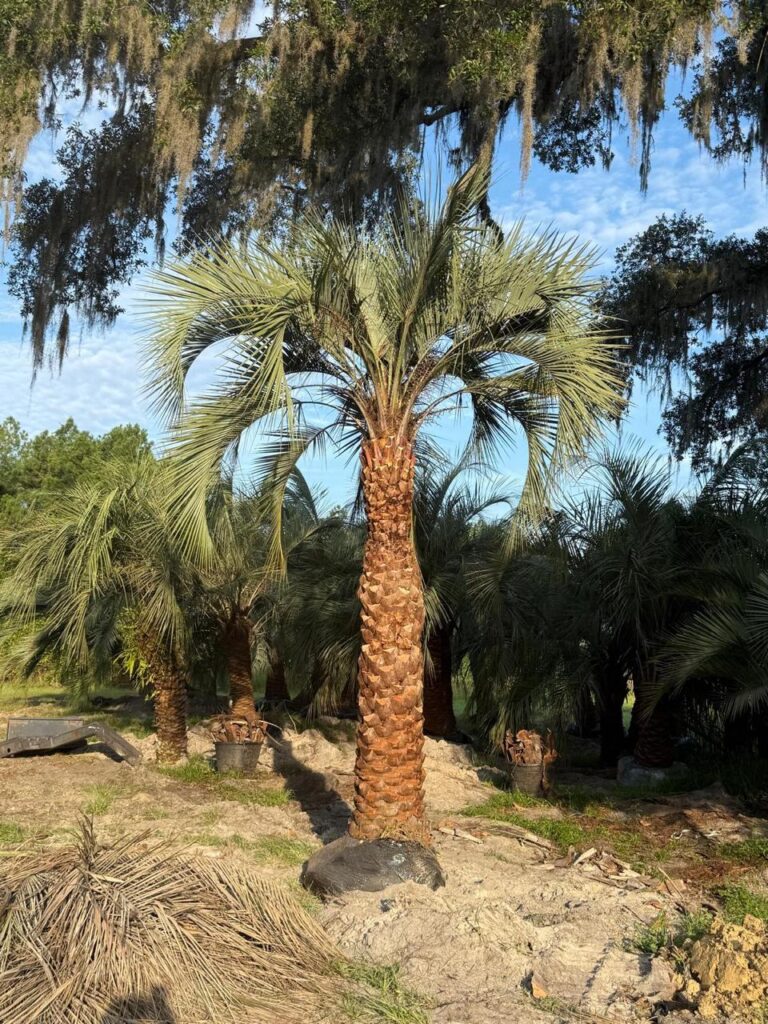
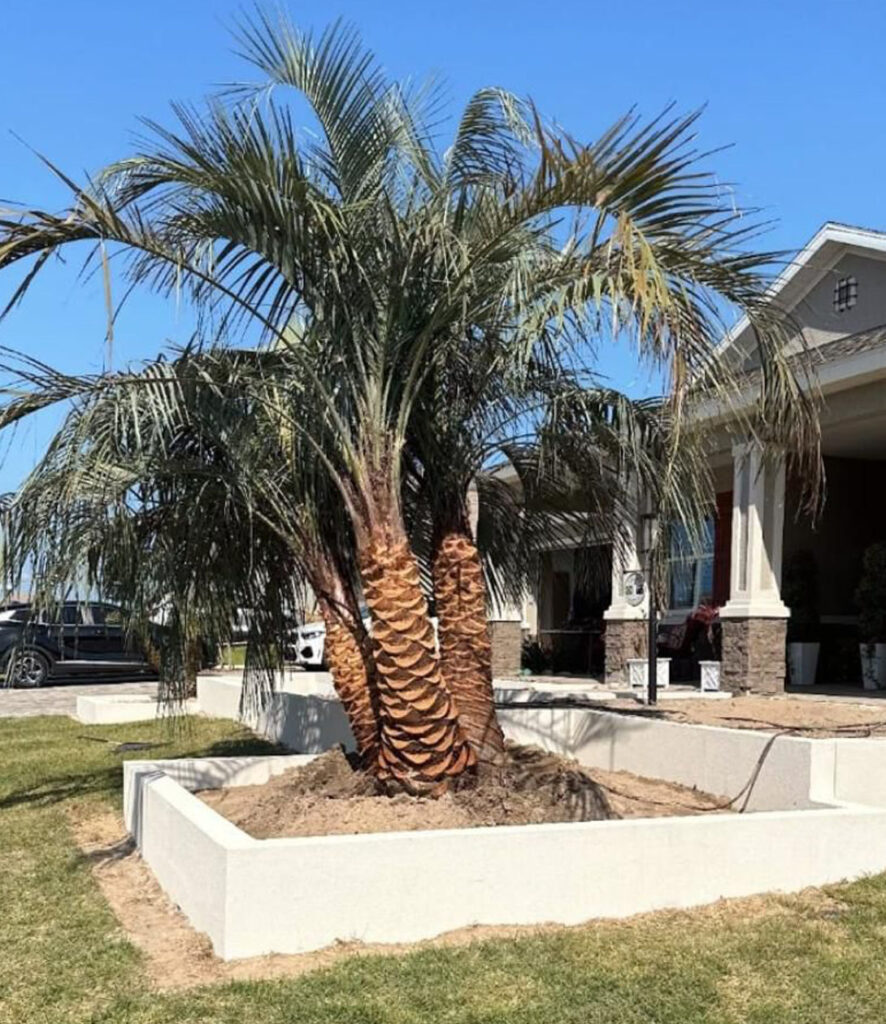
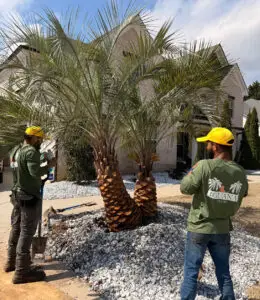
Multiple Trunk Pindo Palms: Two, three, four even five trunks emerging from a single base – exceptional one of a kind palm trees that will create instant focal points. They are collectors palms, rarities that elevate any Orlando landscape into showcase territory.
Exceptionally Large Specimens: While standard Pindos can be found almost anywhere, we specialize in very large palm trees that can reach up to 15-20 feet of trunk! These palm trees are beyond competition, and will create a presence impossible to achieve with younger palms- perfect for new constructions wanting immediate maturity.
The Value of Exceptional Specimens:For custom homes in Windermere, historic restorations in Winter Park, or showcase properties in Lake Nona, exceptional palms separate luxury landscapes from standard installations. A double or triple Pindo becomes a property’s signature element- a distinctive feature that makes your Orlando landscape memorable and enhances property value in this competitive market.
Orlando Neighborhoods We Proudly Serve:
Central Orlando: Downtown, Thornton Park, Lake Eola Heights, Delaney Park, Mills 50, Colonialtown, College Park, Audubon Park.
Winter Park & North: Winter Park, Maitland, Eatonville, Altamonte Springs, Longwood
East Orlando: Avalon Park, Waterford Lakes, Alafaya, University area (UCF), Union Park
South Orlando: Hunters Creek, Meadow Woods, Lake Nona, Orlando International Airport area
West Orlando: Dr. Phillips, Windermere, MetroWest, Bay Hill, Gotha, Ocoee, Winter Garden
Master-Planned Communities: Baldwin Park, Celebration, Lake Nona, Avalon Park
Luxury Communities: Windermere, Isleworth, Bay Hill, Lake Butler Sound, Dr. Phillips estates
Transform Your Orlando Landscape with Cold Hardy Excellence
From historic Winter Park bungalows to Windermere lakefront estates, from Lake Nona modern masterpieces to Baldwin Park townhomes, from Dr. Phillips golf course properties to downtown Orlando urban spaces – Iguana Palms provides the cold-hardy, Orlando-proven palms that thrive in our Zone 9b climate.
Whether you’re seeking elegant Sylvester palms, bulletproof Sabal Palmettos, one-of-a-kind double or triple Pindos, we offer quality and selection unmatched in Central Florida.
Contact Iguana Palms Today:
- Schedule your complimentary design consultation
- Arrange a farm visit to see our exceptional specimens
- Request Installation quotes
- Inquire about selling your oversized palms.
Your locally-grown, Orlando-proven palm trees are waiting to transform your landscape.Proudly serving Greater Orlando, Orange County, and surrounding Central Florida communities with field-quality cold-hardy palms that thrive in our climate.
quality cold-hardy palms that thrive in our climate.
Iguana Palms: Where Orlando’s Finest Palms Grow