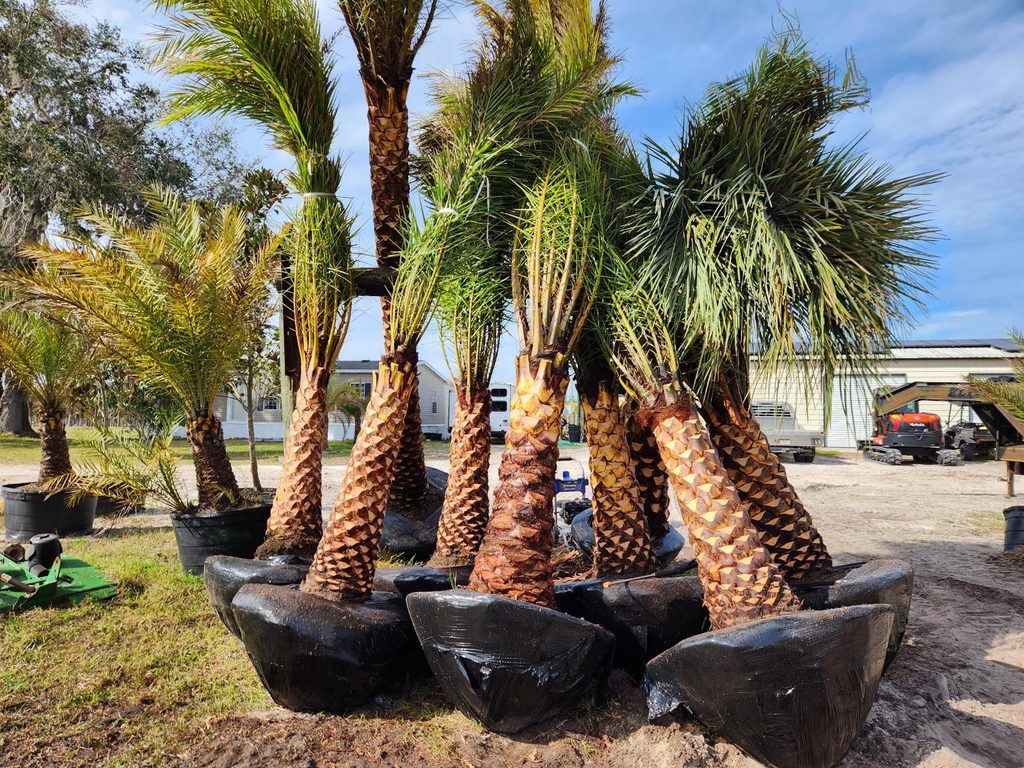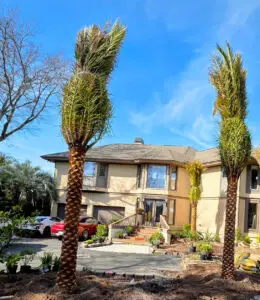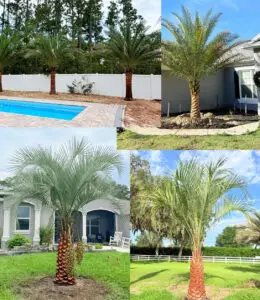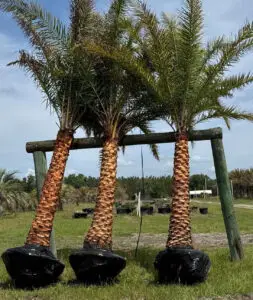
For most Central and North Florida properties, a Sylvester palm (Phoenix sylvestris) is the smarter choice over a Canary Island date palm (Phoenix canariensis). It delivers nearly the same majestic, silvery date-palm look at a far more manageable size, with lower maintenance, comparable cold tolerance, lower disease risk, and a lower price. The Canary Island date palm is still a stunning tree — but its massive scale, higher upkeep, and disease exposure make it a bigger commitment.
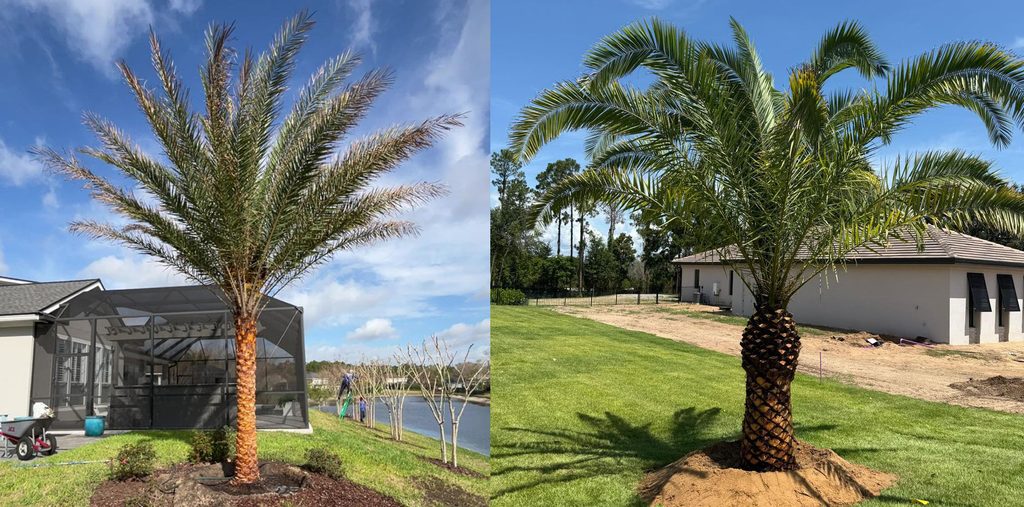
Reasons to choose a Sylvester palm over a Canary Date Palm
SCALE: The Sylvester palm fits Central and North Florida properties better
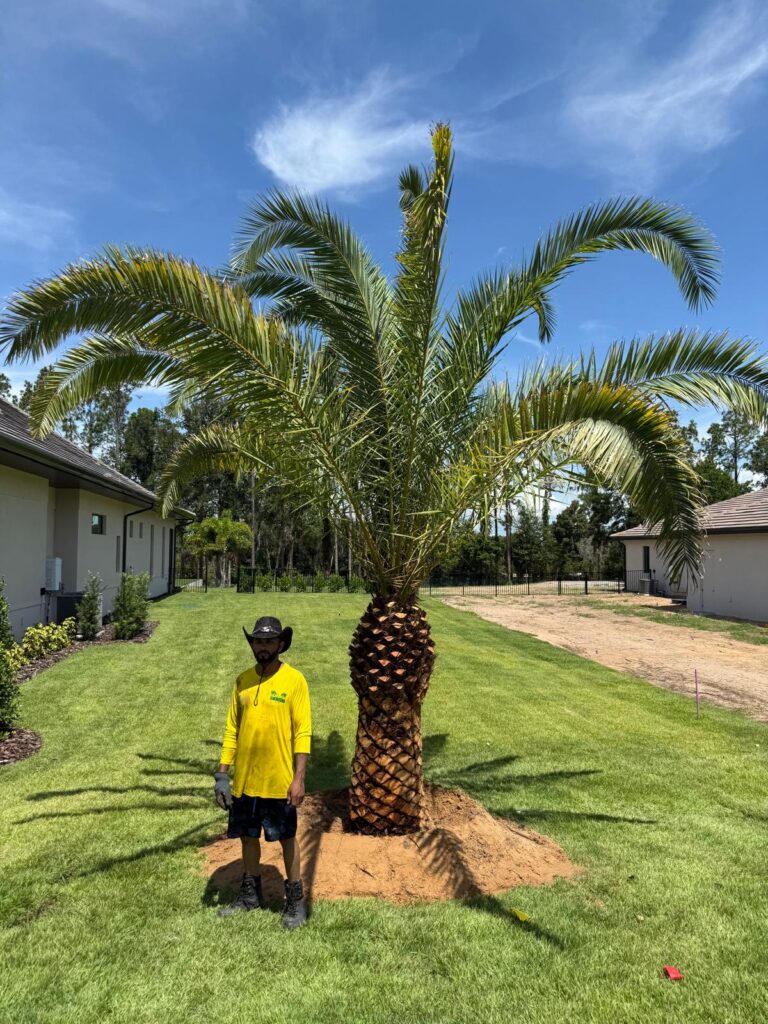
The single biggest reason to choose a Sylvester palm is scale. A Canary Island date palm is the largest palm used in Florida landscapes — it can reach 40–60 feet with a 20–40 foot crown and a trunk 2–3 feet thick. On a typical residential lot, or even many commercial sites, that is simply too much palm: it overwhelms the house, crowds walkways, and needs serious clearance from structures and power lines. A Sylvester palm gives you the same regal date-palm silhouette in a 10–15 foot canopy that fits driveways, entrances, and yards without taking over the landscape.
COLD HARDINESS: The Sylvester Palm is cold-hardier than the Canary Island Date Palm
Although both the Sylvester and Canary Island Date are suitable for most of Florida and are approved for You Zones 8b–11, the Sylvester palm is the more cold-hardy of the two. The difference arises when temperatures drop and there is an occasional freeze. Canary Island dates are more prone to cold damage than Sylvester Palms, and recover better when temperatures warm up again.
MAINTENANCE: Lower Maintenance and Safer
Sylvester palms are lower maintenance, largely self-cleaning, and easier to live around. The Canary Island date palm is not self-cleaning: it holds onto its dead fronds, so it needs regular pruning and the labor-intensive “pineapple” trimming that gives it its signature look. It also carries 3–4 inch needle-sharp spines at the base of each frond — a real hazard near walkways, pools, and play areas — and it is very susceptible to nutritional disorders, so it demands careful, ongoing palm-specific feeding. A Sylvester palm asks far less of you year to year.
BETTER VALUE: The Sylvester Palm is less expensive
A mature Canary Island date palm is a premium purchase: it grows slowly, takes years to reach specimen size, and large trees command high prices — a big investment in general. Sylvester palms are more affordable, more widely available from Florida growers, and easier to buy in matched sizes for a consistent look across a project. When you buy grower-direct, you also get a healthier, climate-acclimated palm at a better price when comparing trunk-size pricing. In some cases,
When does a Canary Island Date make sense?
The Canary Island date palm is still a magnificent tree, and there are places where it is the right call: grand estates, resort entrances, boulevards, and large open landscapes where its sheer scale is the whole point and there is room to let the crown spread. If you have the space, the budget, and the willingness to maintain it — and you want the single most commanding palm in the region — the Canary delivers. For the other 90% of Central and North Florida properties, the Sylvester palm is the more practical way to get a similar elegant look.
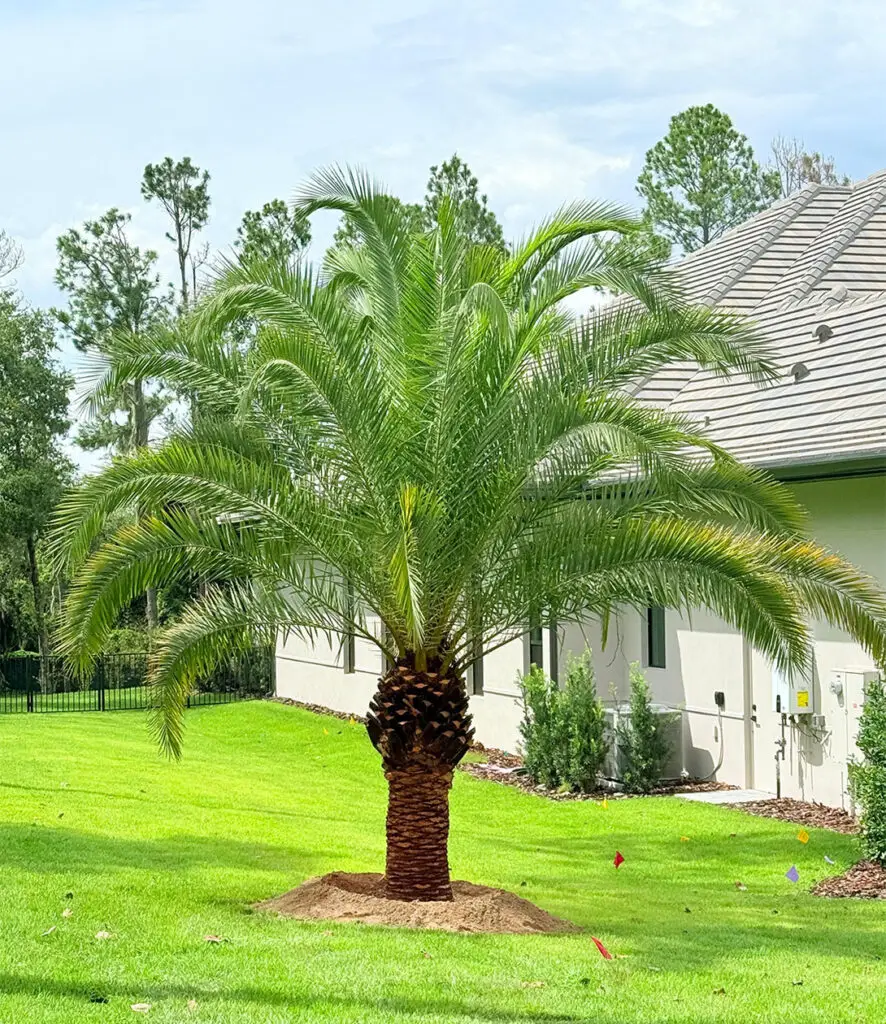
Where to buy Sylvester palms in central and north Florida
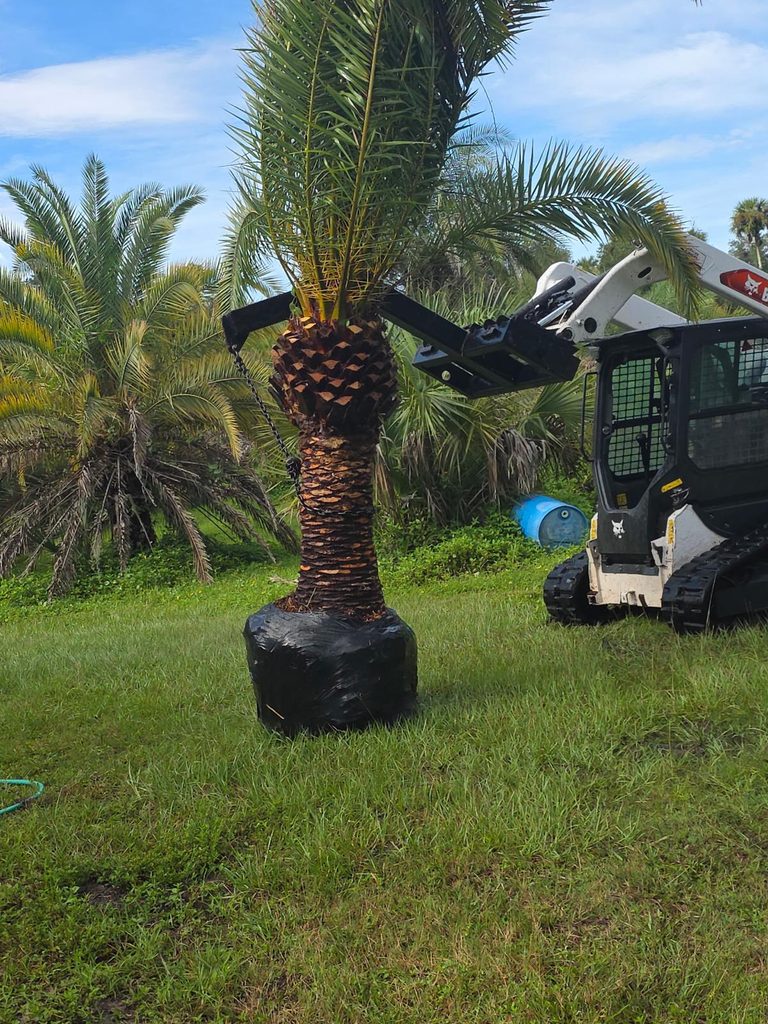
Buy Sylvester palms grower-direct from a Florida farm so you get a healthy, climate-acclimated tree at wholesale pricing. Iguana Palms is a family-owned palm farm that specializes in cold-hardy Sylvester palms, grown on the northernmost palm farm in Florida along with fields in Georgia. Iguana palms has a large variety of sizes ranging from 3 to more than 30 feet of trunk — with delivery and installation across most of Florida and Georgia. Whether you want a single statement palm or a matched row for a project, you can source and install it from one place.