Types, Differences, Landscape uses and How to Choose the Right Date Palm
Date Palms are among the most iconic landscape trees in the world. Their sculptural trunks, feathered fronds, and architectural silhouettes create instant elegance and tropical character. But what many people don’t realize is that “date palm” is not just one tree- it refers to several species within the Phoenix genus- all of which are different in size, texture, cold tolerance and design purpose.
Understanding the different types of date palms helps you choose the right palm for your climate, space and landscape vision.
1. True Date Palm (Phoenix dactylifera)
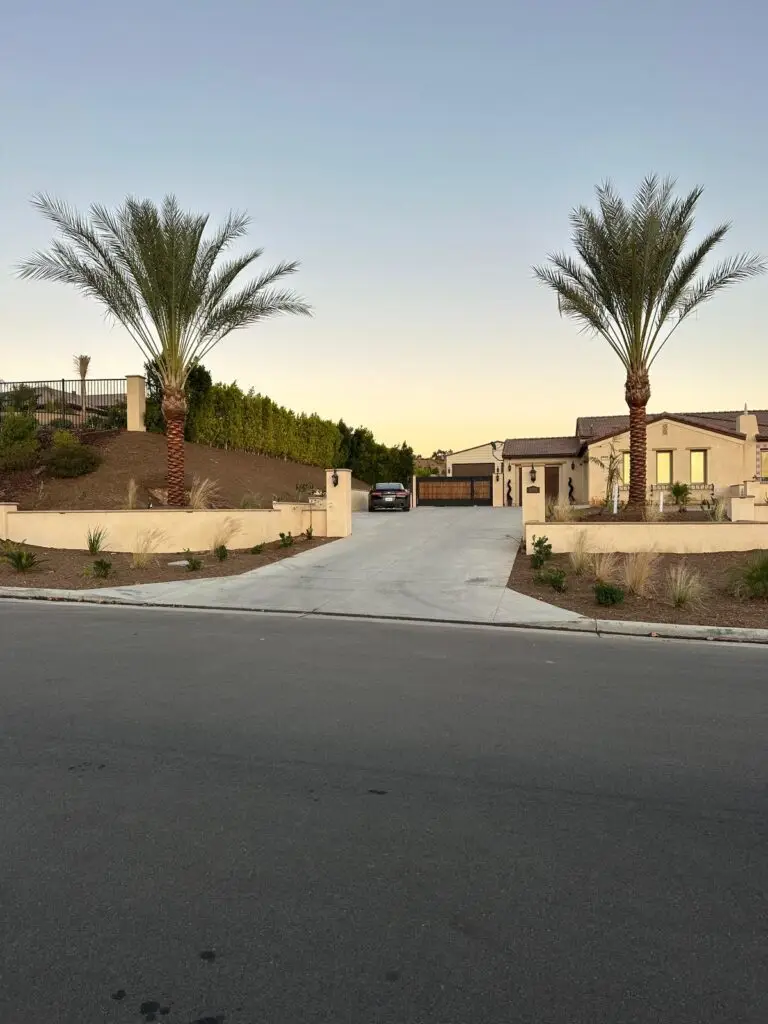
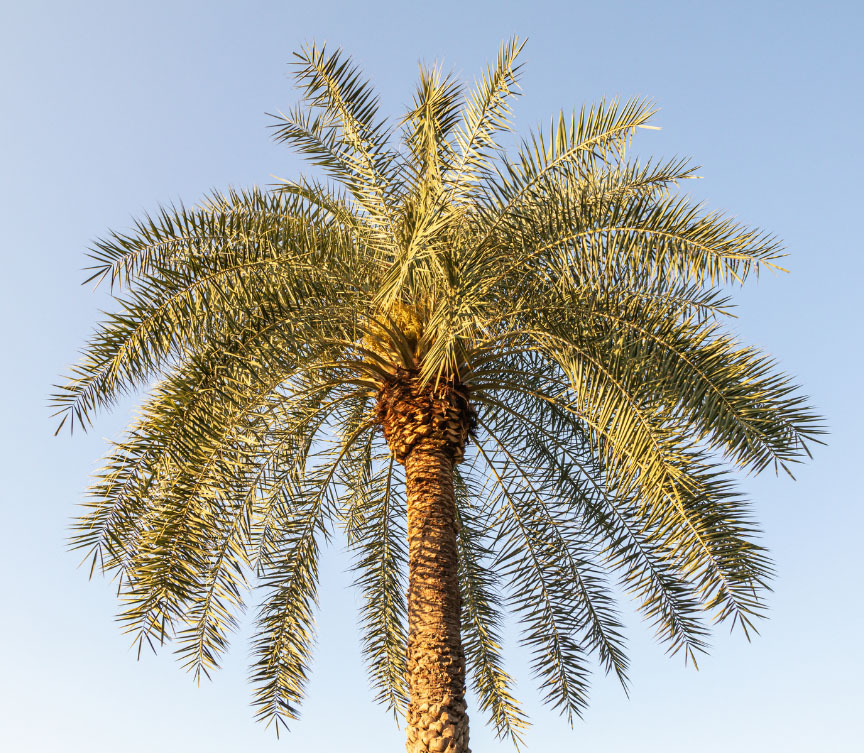
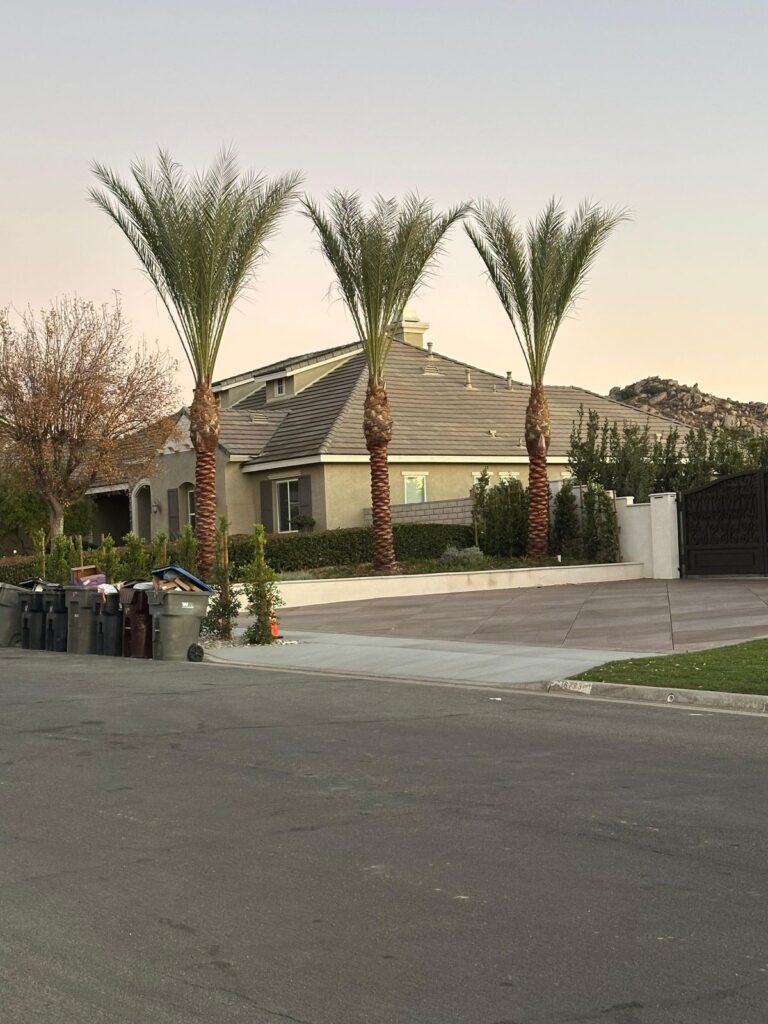
Best known for: Edible dates and classic Middle Eastern landscapes
The true Date Palm is a tall, elegant species with a gray, slender trunk marked with classic diamond leaf scars combined with a narrow upright canopy. It is an elegant and graceful addition to large landscapes. Mature trees can reach impressive heights of 50-80ft that evoke a stately silhouette that evokes Mediterranean vibes. When both male and female trees are present, they produce clusters of edible dates, adding both ornamental and agricultural value.
Best Uses
- Large estates
- Mediterranean-stye landcspaes
- Agricultural or edible gardens
- Formal rows or avenues
Climate
- USDA zones 9-11
- Extremely heat tolerant
- Moderate drought tolerance once established
2. Canary Island Date Palm (Phoenix canariensis)
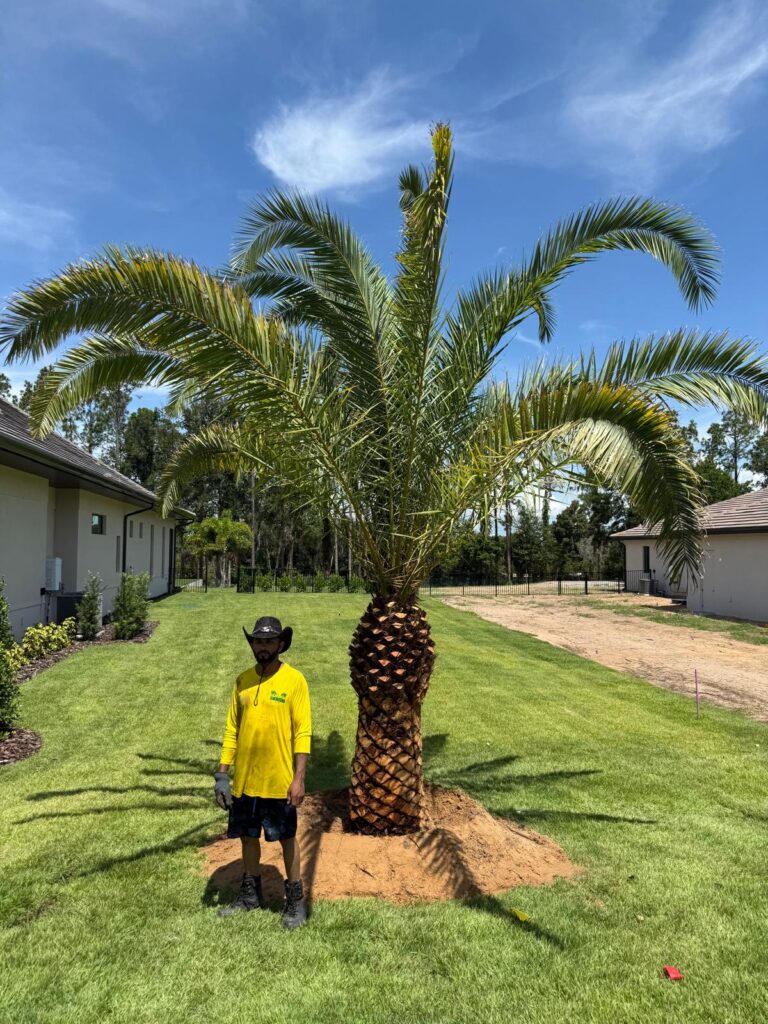
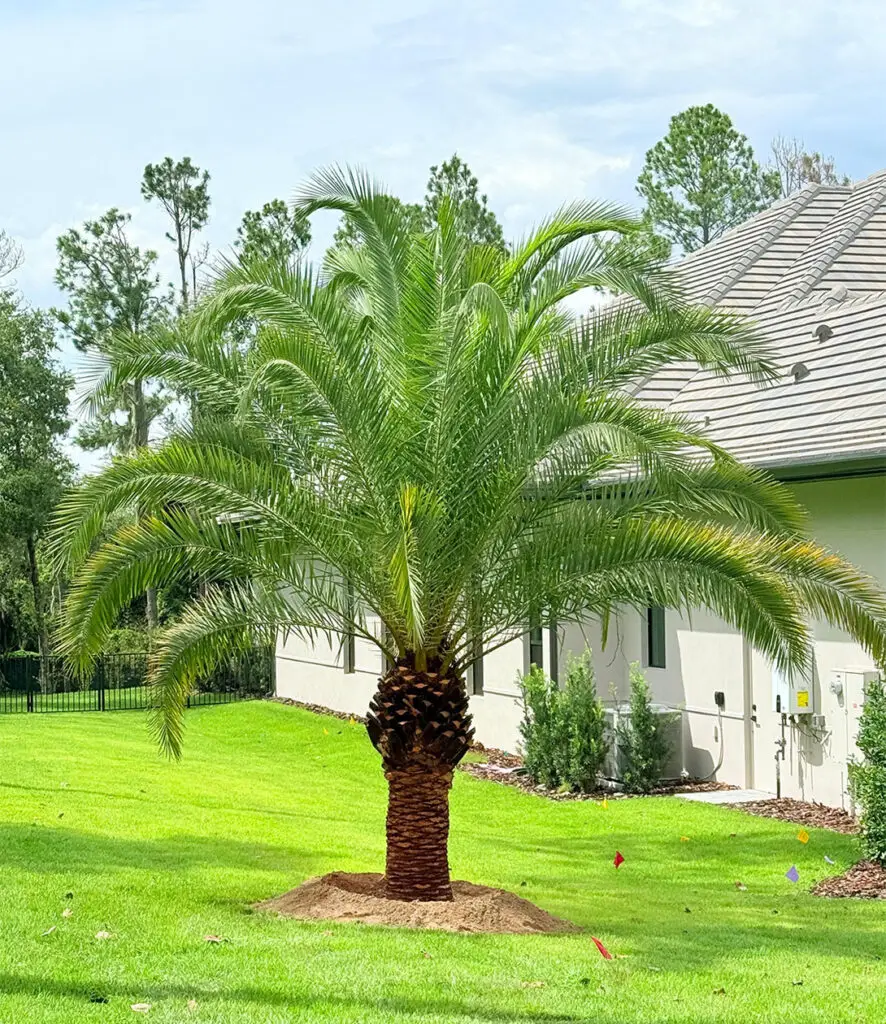
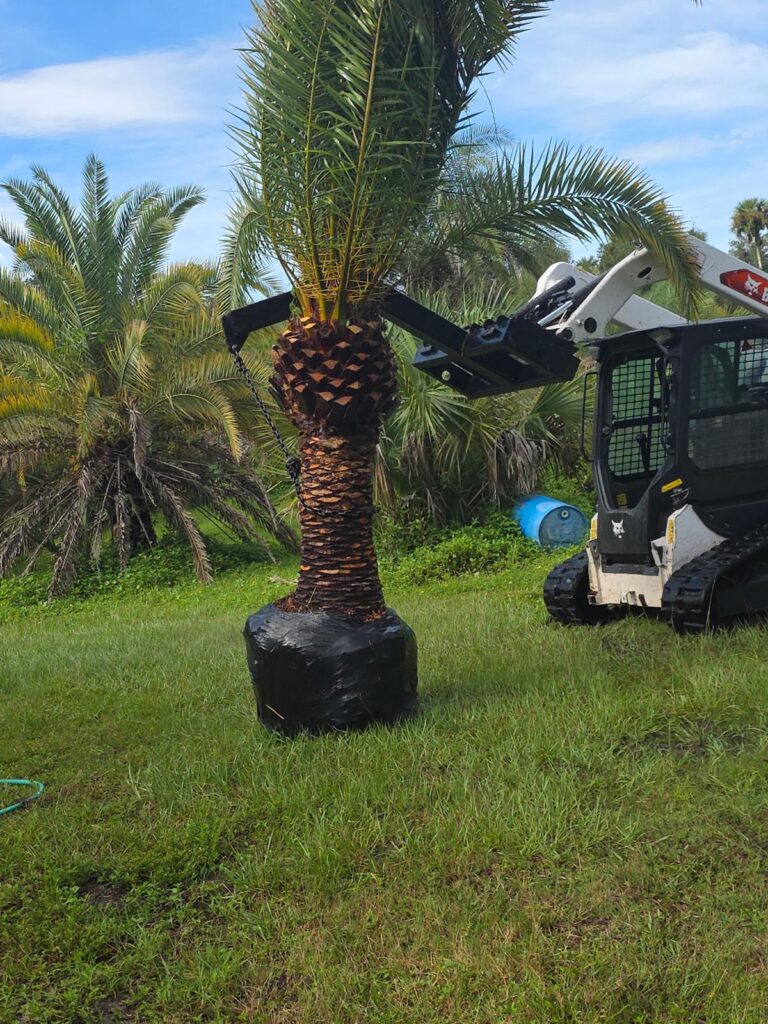
Best known for: Massive trunk and dramatic presence
The Canary Island Date Palm is prized for its massive, textured trunk that grows up to 4ft wide and dense, symmetrical crown of arching fronds- giving it a bold architectural presence unmatched by most palms. Its heavy trunk base and full canopy create create a commanding focal point, making it one of the most visually dramatic palms used in high-end landscapes and grand entrances. It can grow up to 40-60 feet tall and although very slow growing, extremely long-lived.
Best Uses
- Luxury properties
- Statement focal points
- Grand entrances
- Commercial landscapes
Climate
- USDA zones 9-11
- Moderately cold resistant for a feather palm
- Highly wind resistant
3. Sylvester Date Palm (Phoenix sylvestris)
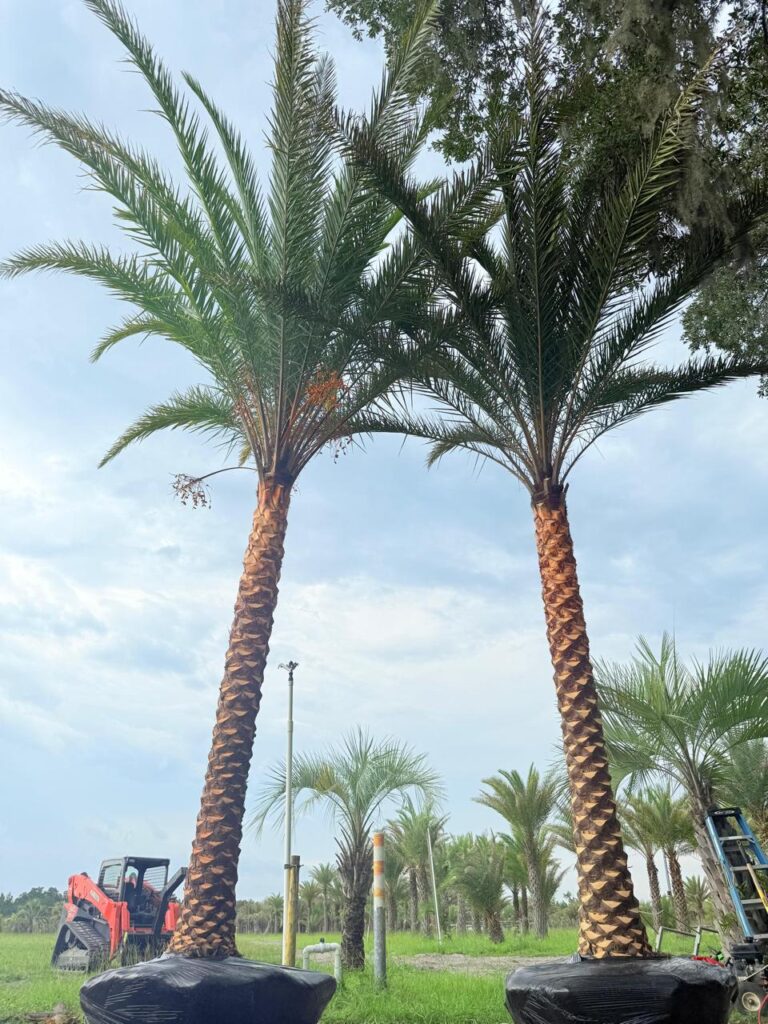
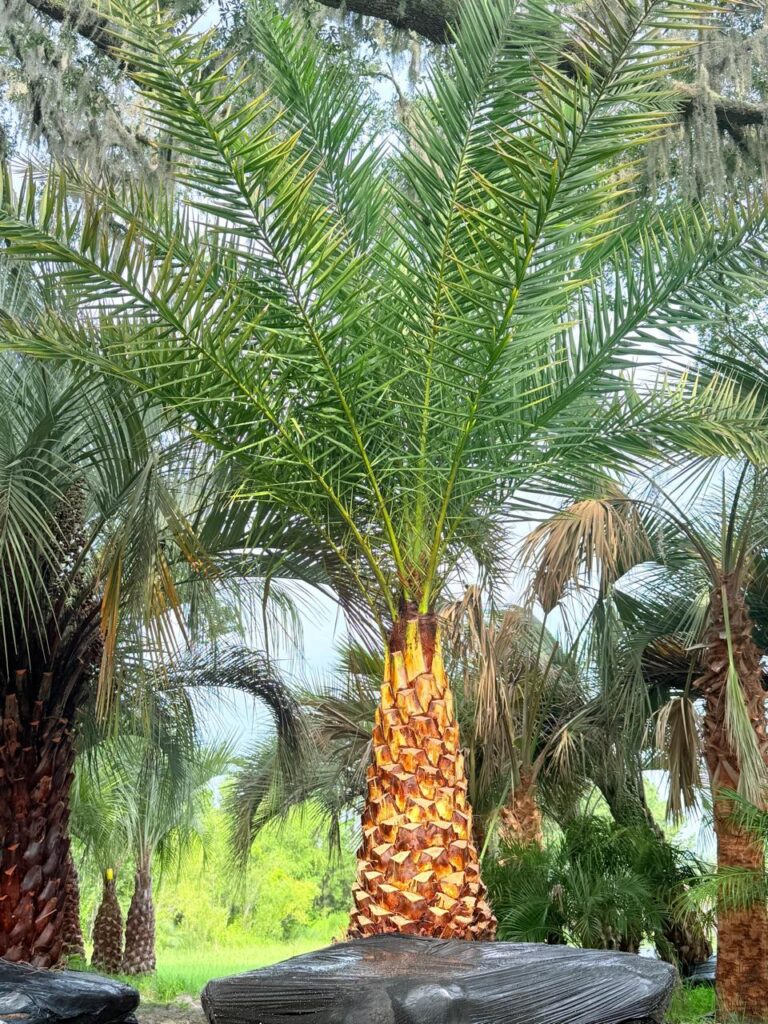
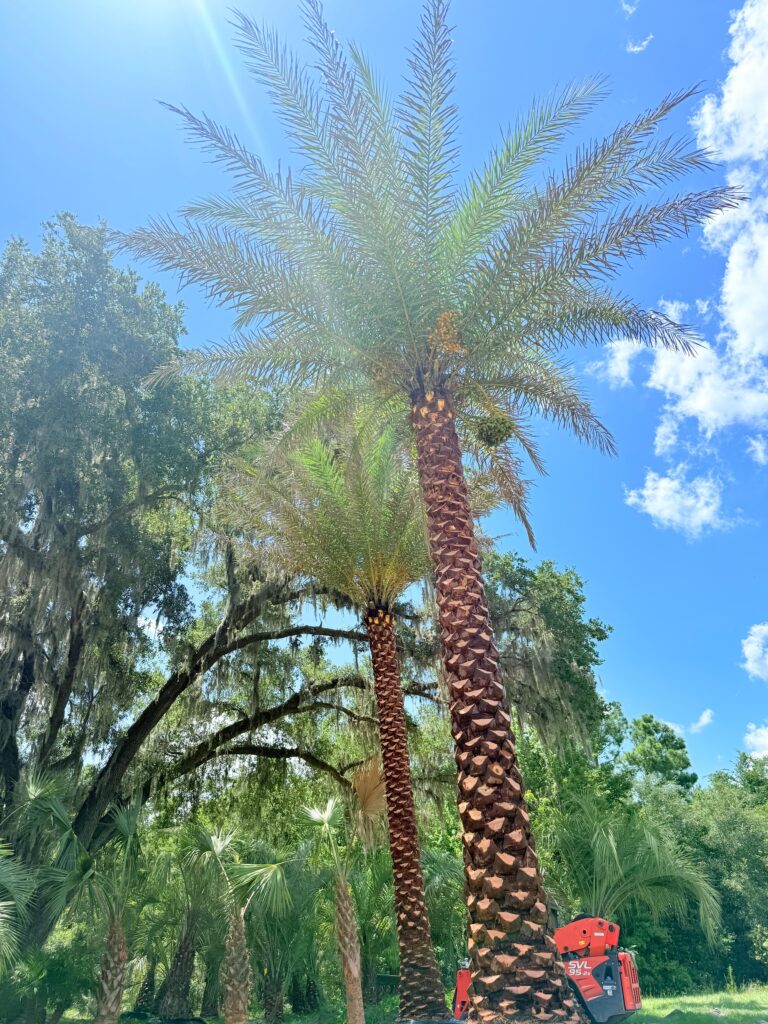
Best known for: Small size +refined look
The Sylvester Date palm stands out for its graceful form, thick trunk, and distinctive silvery-blue fronds that shimmer in the sunlight. It grows to a height for up to 30-50 feet, and its canopy is slightly more open than other large date palms, giving it a refined, airy appearance while still maintains its strong visual structure. This combination of elegance and resilience makes it a favorite among designers seeking both beauty and adaptability.
Best Uses
- Resort-style residential landscapes
- Poolside focal points
- Coastal designs
- Mediterranean or desert themed gardens
Climate
- USDA zones 8b-11
- More cold hardy than Canary Island date palm
- Tolerates heat and humidity well
4. Pygmy Date Palm (Phoenix roebelleni)
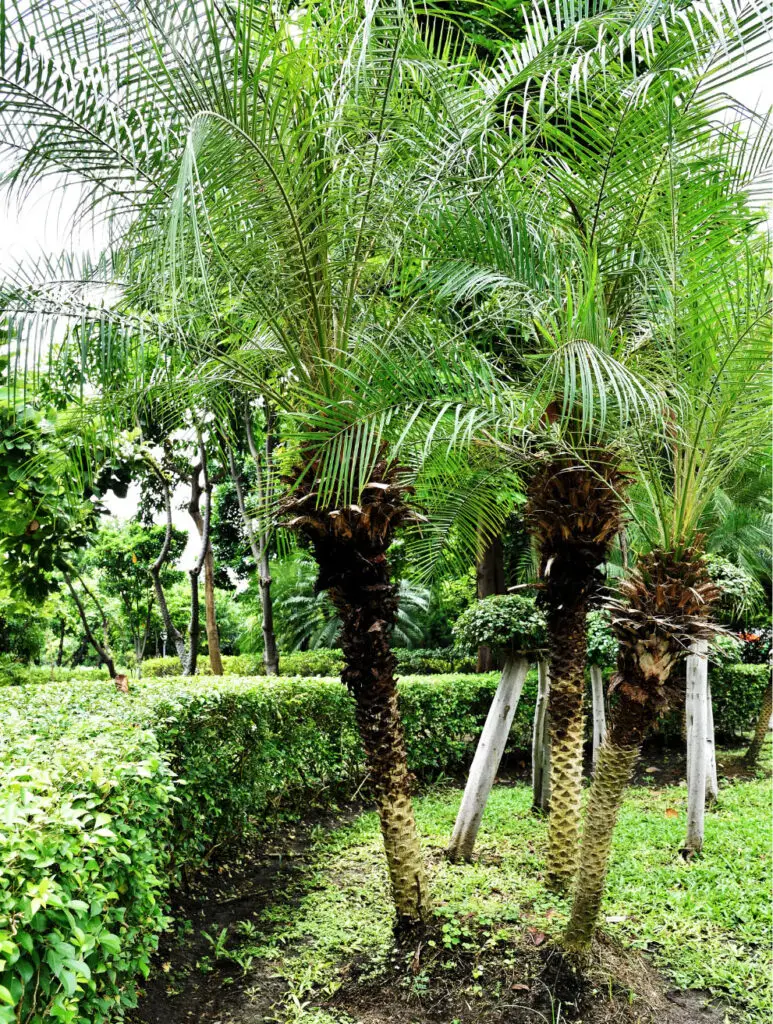
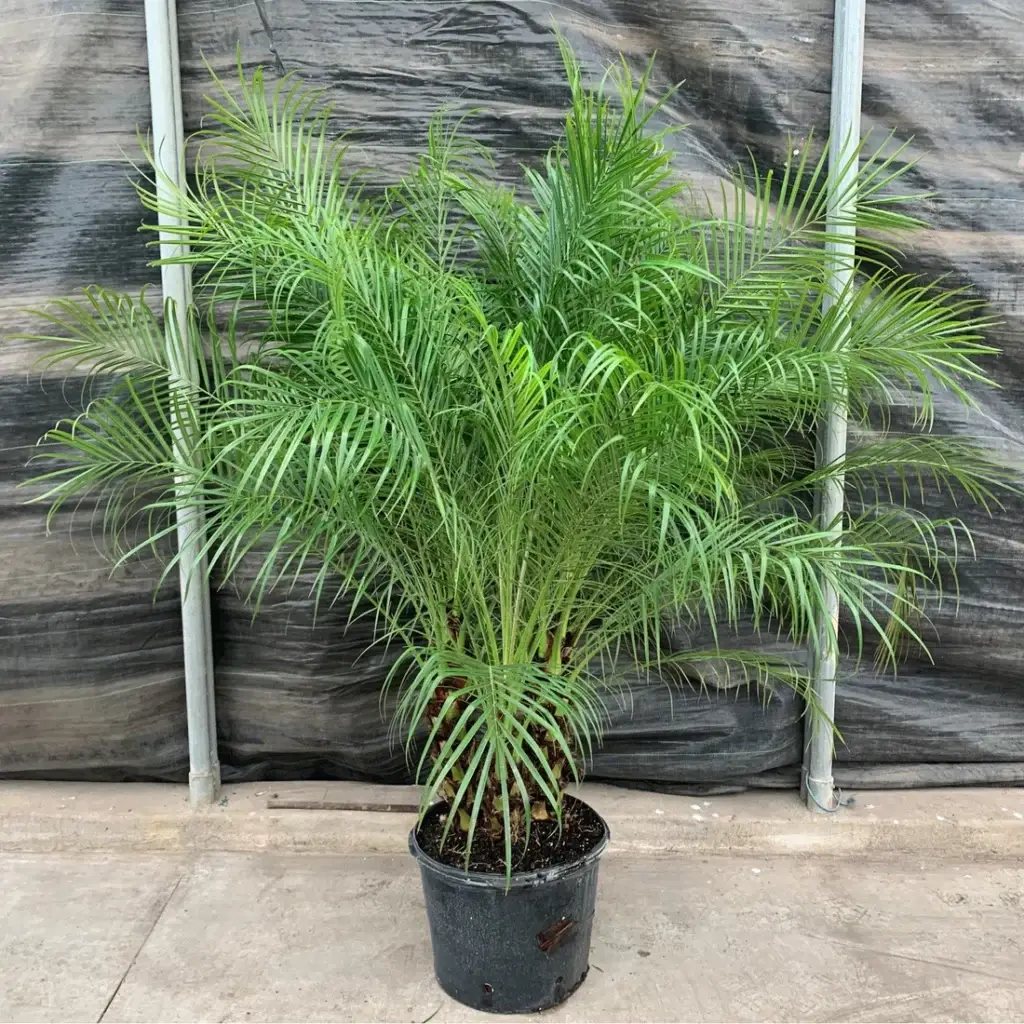
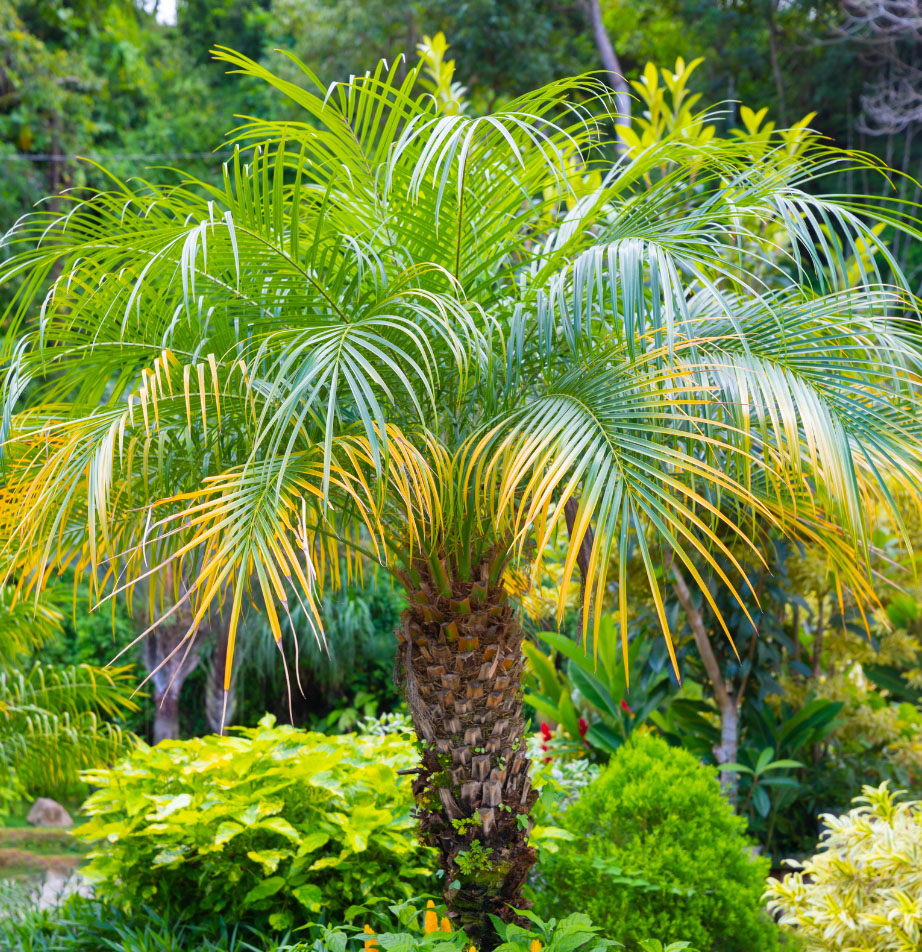
Best known for: Small size and refined look
The Pygmy date palm is a compact, finely textured palm with gently arching fronds and a delicate, tropical appearance. Often grown with multiple trunks, it creates a layered, soft look that works beautifully in smaller spaces. Its manageable size and graceful form make it ideal for intimate garden settings, potted in a patios, or indoors.
Best Uses
- Courtyards
- Entryways
- Pool decks
- Container planting
- Small yards
Climate
- Zones 9b-11
- Sensitive to frost
- Prefers partial shade when young
5. Senegal Date Palm (Phoenix reclinata)
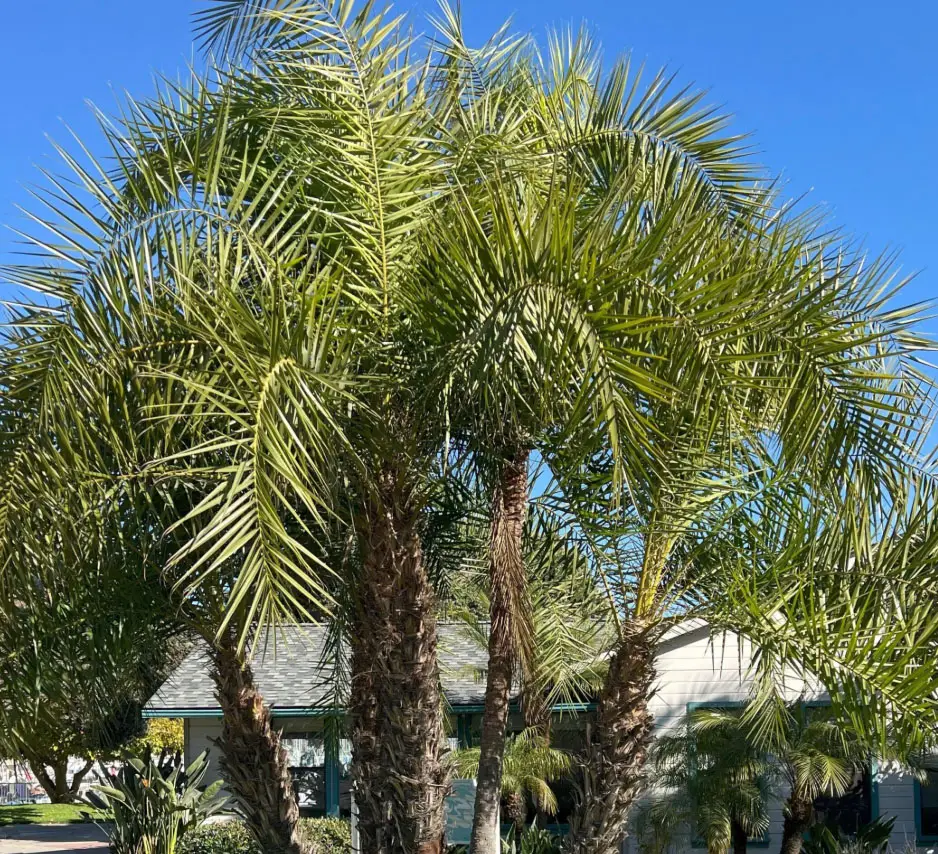
Best Known for: Natural clumping growth
The Senegal Date Palm naturally forms clusters of multiple trunks, creating a lush, full-bodied appearance that feels wild and tropical. Its dense growth habit and layered canopy provide strong visual depth, while its arching fronds add movement and texture. It grows up to 15-30ft in multi-stemmed clusters, and over time can develop into a natural palm hedge that forms a screen.
Best Uses
- Privacy screens
- Jungle gardens
- Naturalistic landscapes
- Large properties
Climate
- Zones 9-11
- Heat tolerant
- Moderate drought tolerance
Date Palm Comparison Chart
| Palm | Height | Look | Cold-tolerance | Best Use |
| True Date | Very tall | Classic | Medium | Architectural/ estates |
| Canary | Massive | Dramatic | Medium | Statement focal |
| Sylvester | Tall | Silvery | High | Luxury landscapes |
| Pygmy | Small | Elegant | Low | Small spaces |
| Senegal | Medium | Wild | Medium | Screens |
Final Designer Insight
Date palms are not interchangeable. Selecting the right species is what separates an average landscape from a professionally designed one. The trunk texture, canopy density, growth rate, and mature scale all dramatically affect how the finished garden looks.
When used intentionally, date palms become living architecture peaces for hour home. Our designers and palm experts at Iguana Palms would be happy to help you find the right date palm for your property.