Winter Garden is one of Central Florida’s fastest-growing cities—a vibrant community of nearly 47,000 residents in western Orange County, just 14 miles from downtown Orlando. From the tree-lined brick streets of historic Downtown to the master-planned neighborhoods of Horizon West, palm trees are central to the landscape.
But Winter Garden’s inland location and well-documented freeze history mean one thing: not every palm belongs here.
The city owes its name to citrus. In the 1800s, settlers recognized this area as a “winter garden” where fruit could grow through mild winters. Then the back-to-back freezes of the 1980s wiped out Orange County’s citrus industry for good. That same freeze risk applies to tropical palms today.
Queen Palms, Coconut Palms, and Arecas planted in Winter Garden are, quite simply, living on borrowed time.
At Iguana Palms, we grow cold-hardy palms specifically suited for Winter Garden. They are freeze-proof for Central Florida’s worst winters, low-maintenance for busy homeowners, properly scaled for HOA-governed lots, and beautiful year-round.
Winter Garden’s Climate and USDA Hardiness Zones
Winter Garden spans USDA Zones 9b (25–30°F) and 10a (30–35°F), depending on proximity to Lake Apopka. Most residential neighborhoods fall within Zone 9b. Typical winter lows range from 38–48°F, but history tells a different story when it comes to extremes.
The freezes of 1894–95 devastated early citrus groves. The 1980s brought multiple killing freezes that permanently ended commercial citrus in Orange County. In January 2010, temperatures dropped into the low 20s across Central Florida. Most recently, the January 2026 freeze pushed nearby areas to 24°F with harsh winds—conditions not seen since 1989.
Every palm you plant in Winter Garden will face a hard freeze during its lifetime.
The question isn’t if—it’s when.
Cold-hardy species remove that risk entirely.
The three best palm trees for Winter Garden homes
1. Pindo Palm (Butia capitata) – The Best All-Around Residential Palm
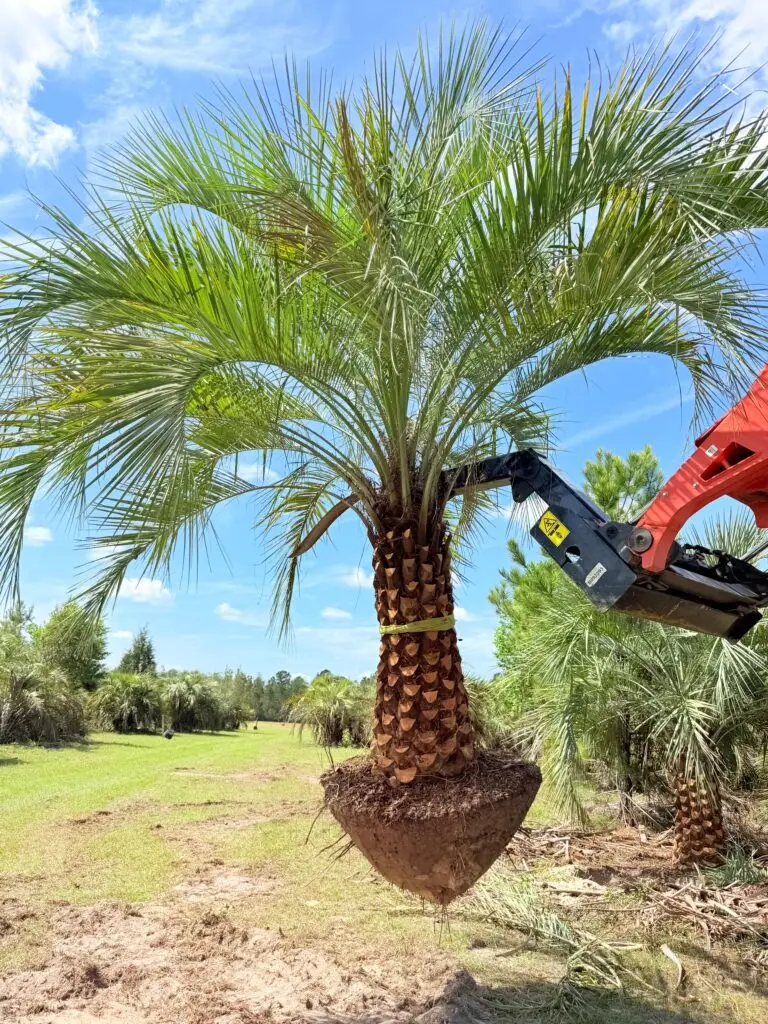
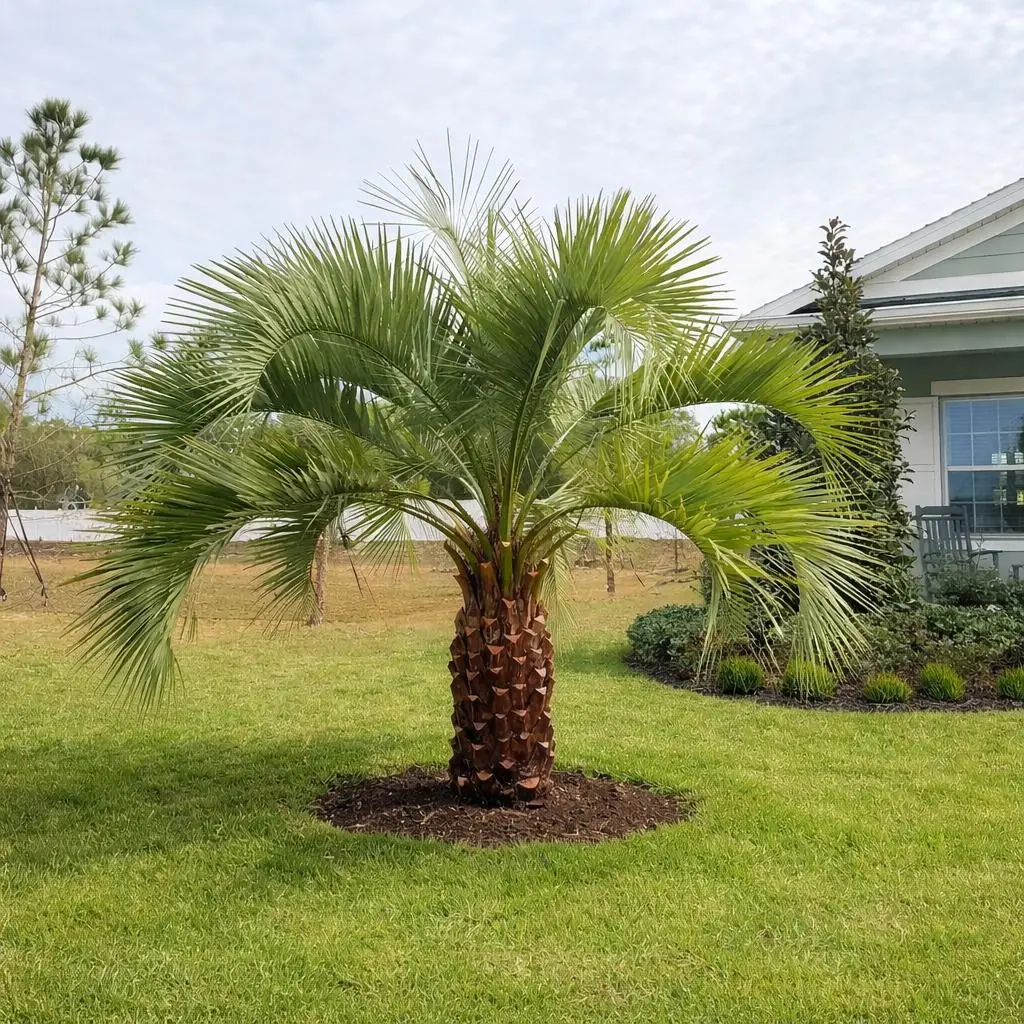
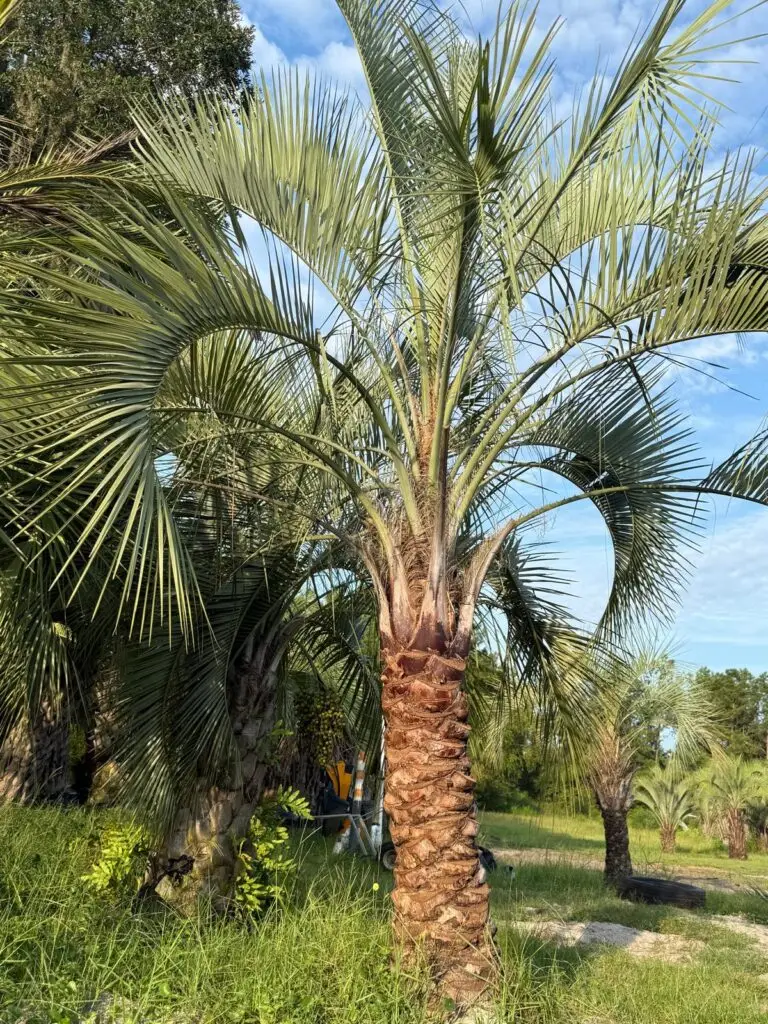
Cold Hardiness: 5–10°F | Height: 15–20 ft | Maintenance: Very Low | Growth: Slow
The Pindo Palm is the single best choice for most Winter Garden properties. It simply does not freeze in Central Florida—period.
At a mature height of 15–20 feet, it fits comfortably within standard lots in communities like Hamlin, Independence, Orchard Hills, and Summerport—without crowding driveways, blocking sightlines, or violating HOA guidelines.
Its silvery-blue fronds add refined curb appeal year-round, while its durability makes it exceptionally low-maintenance: drought tolerant once established, pest-resistant, and slow-growing enough to require minimal trimming.
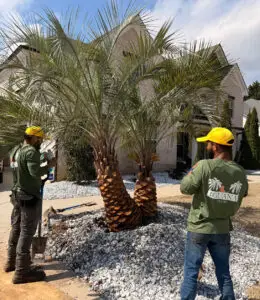
At Iguana Palms, we offer rare double and triple-trunk Pindo Palms. They are distinctive specimens that create a true focal point in front yards and courtyard entries.
2. Sabal Palmetto- Florida’s native state tree
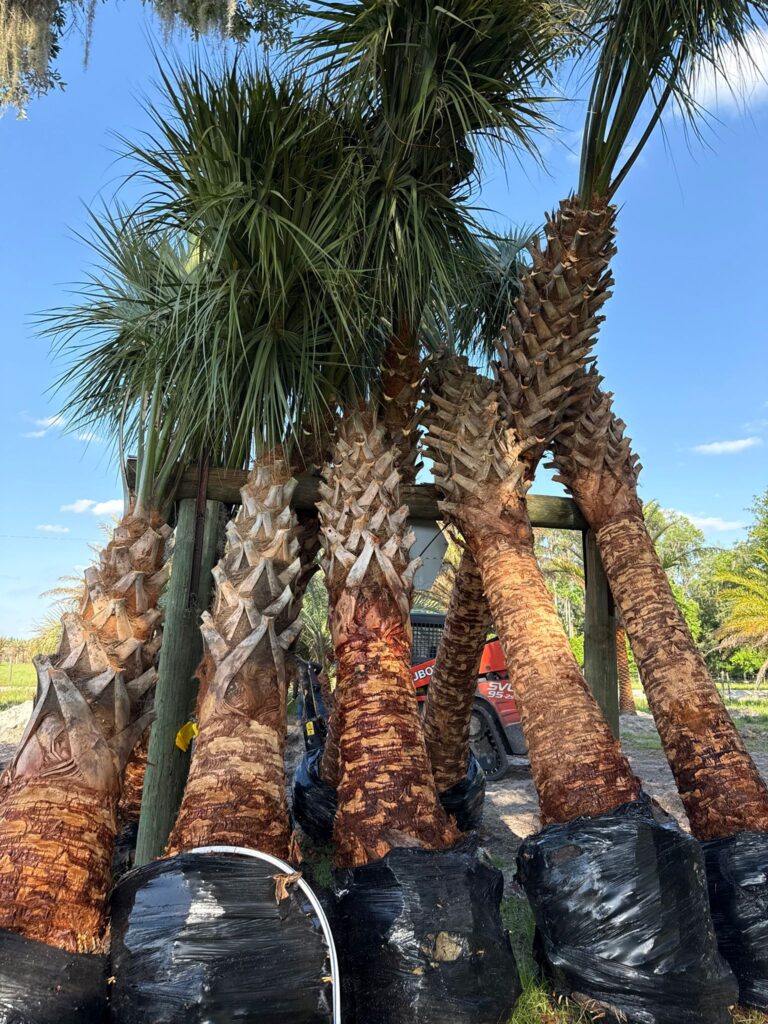
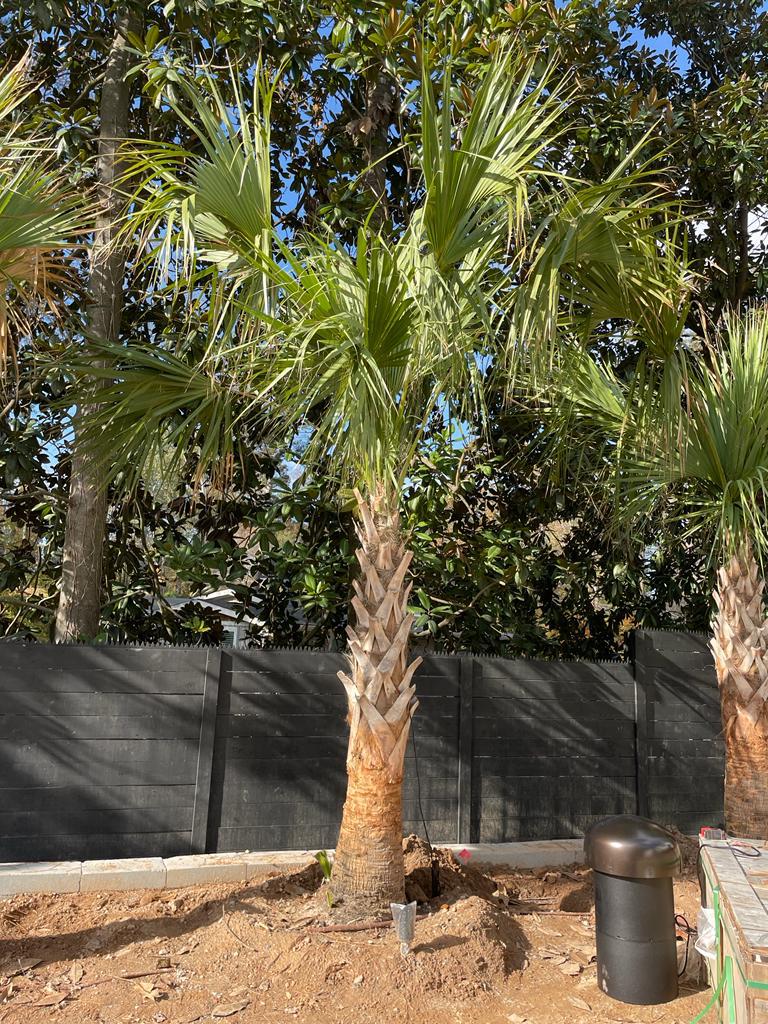
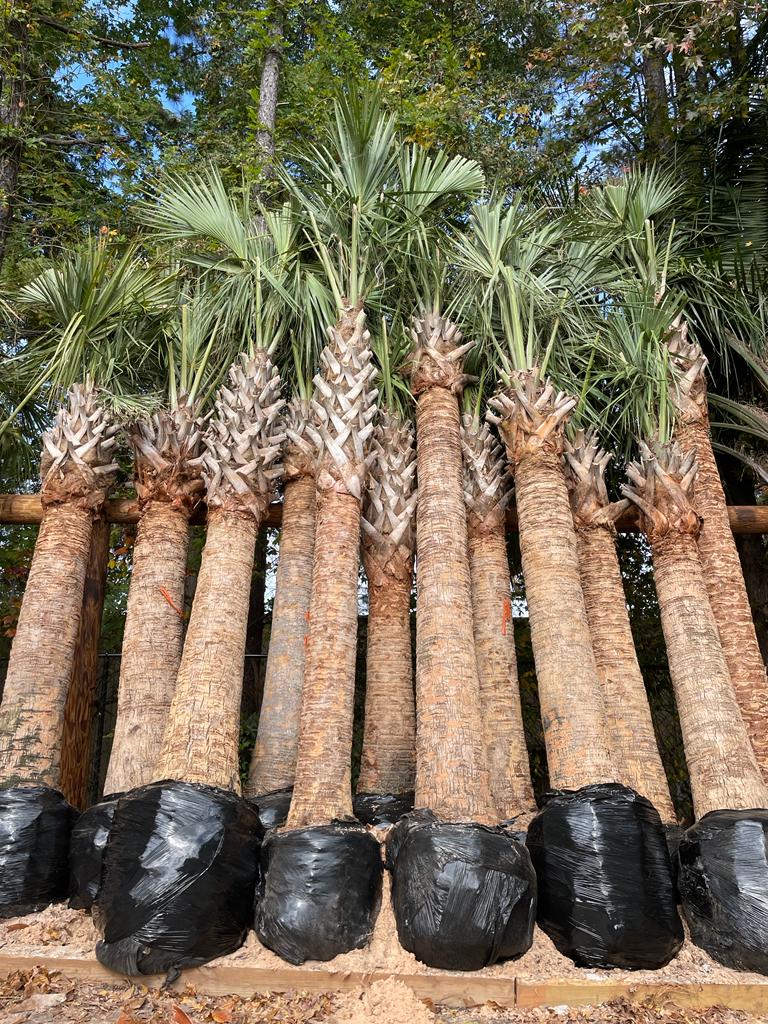
Cold Hardiness: 10–15°F | Height: 40–50 ft | Maintenance: Low | Growth: Slow–Moderate
Florida’s state tree has thrived in the Winter Garden area for thousands of years—long before citrus groves and residential development.
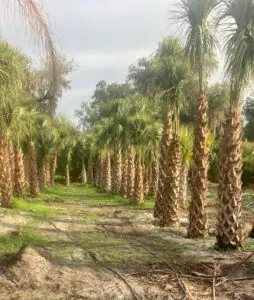
Sabal Palmetto is perfectly adapted to Orange County’s sandy soils, summer heat, seasonal storms, and winter freezes. It requires little intervention and delivers a timeless, authentic Florida landscape aesthetic.
Available in sizes ranging from 6 to 20+ feet of trunk, it’s ideal for larger properties such as Stoneybrook West or lakefront homes along Johns Lake. Best suited for landscapes that can accommodate its full 40–50 foot mature height.
3. Sylvester Palm- (Phoenix sylvestris) – The Premium Statement Palm
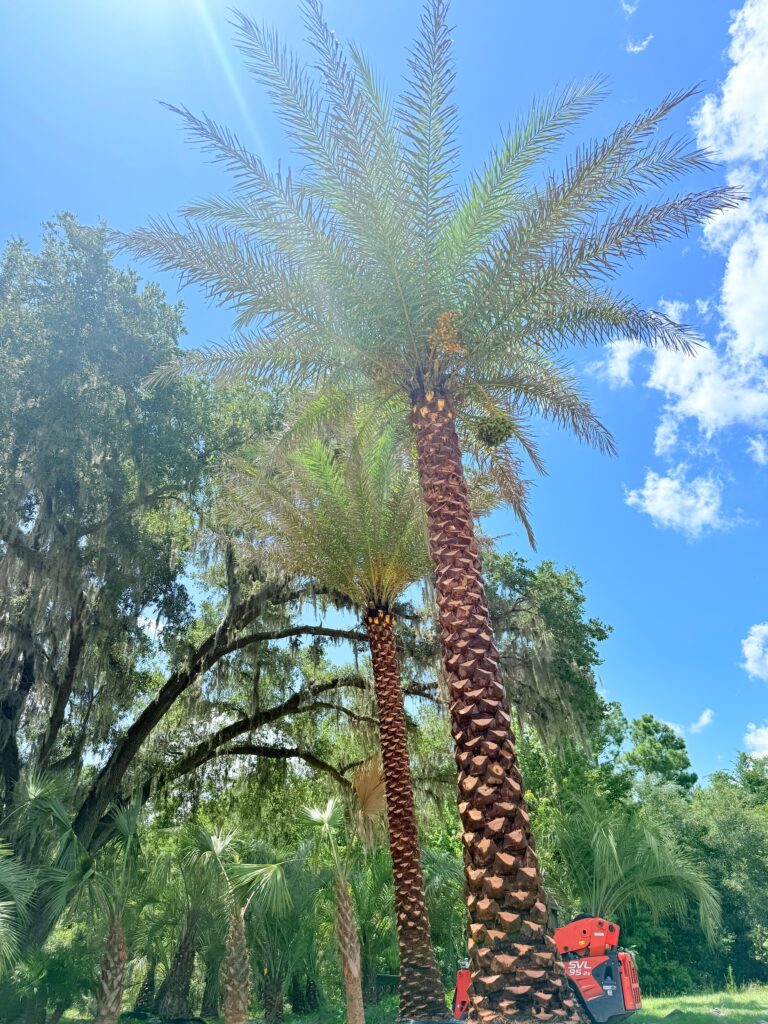
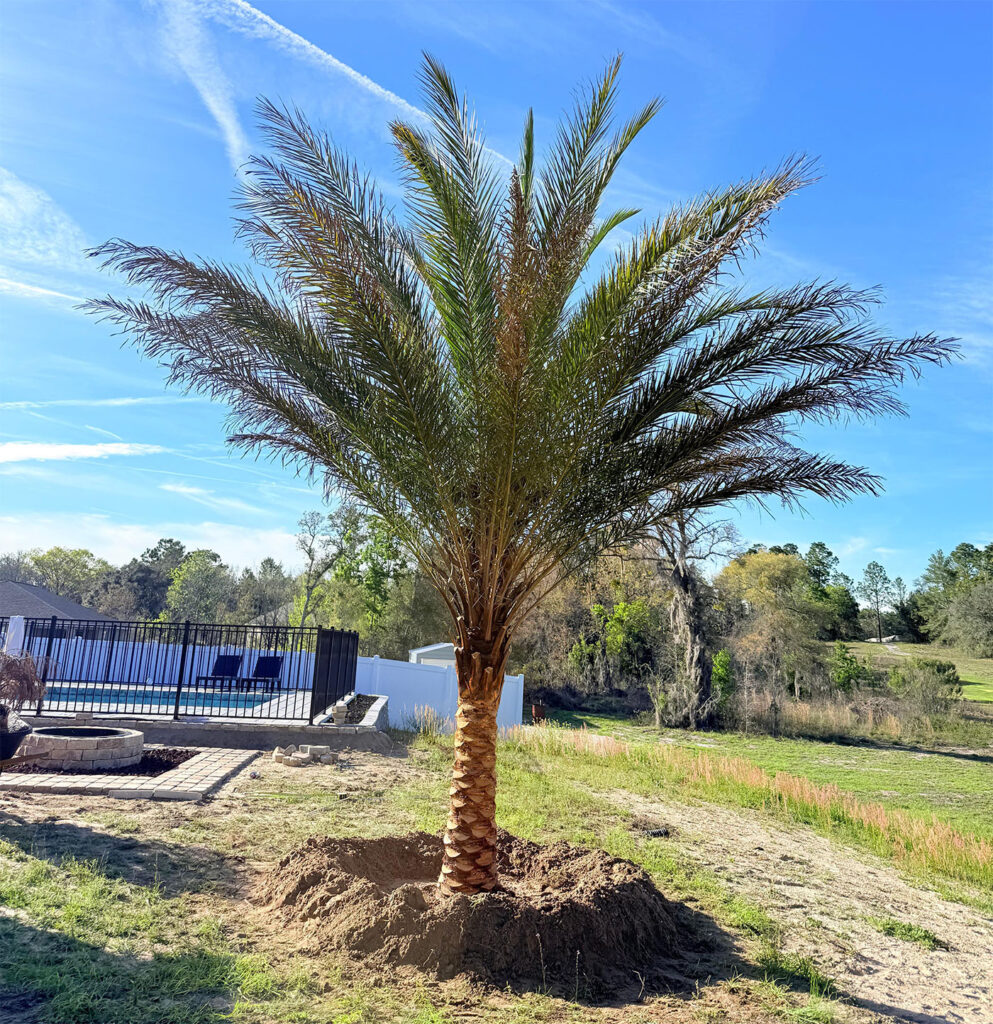
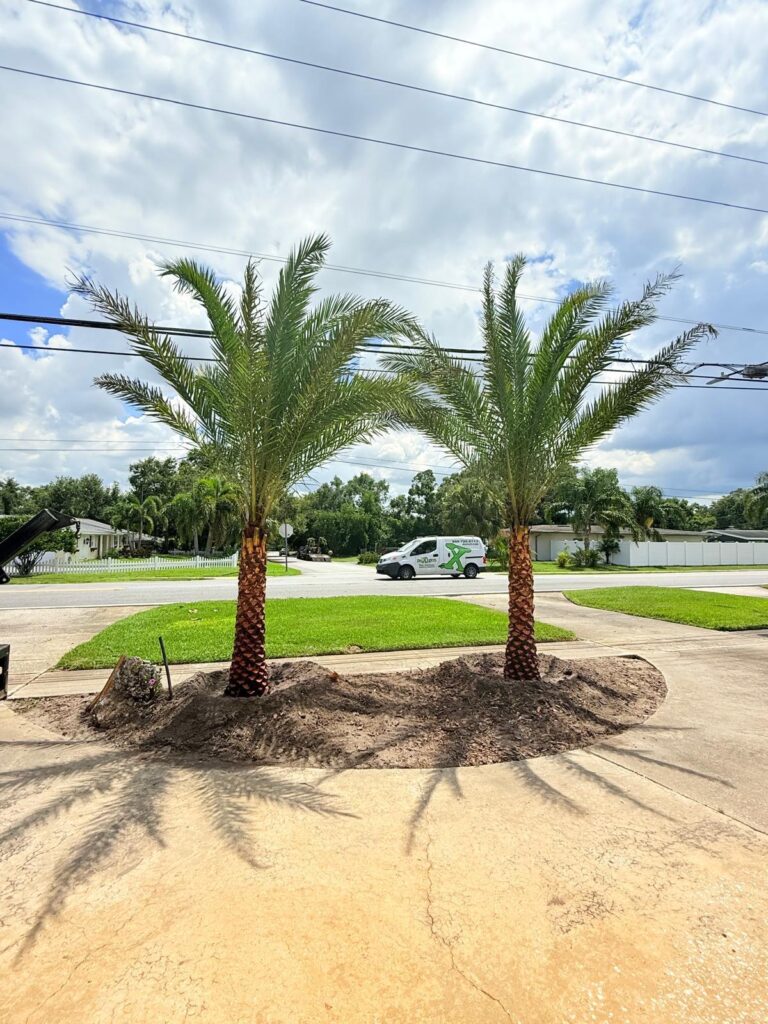
Cold Hardiness: 12–15°F | Height: 30–50 ft | Maintenance: Low | Growth: Moderate
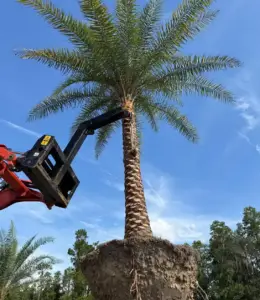
The Sylvester Palm delivers bold architectural presence with striking silver-blue fronds and a textured, sculptural trunk.
It’s the go-to choice for high-visibility properties—corner lots in Watermark or Bradford Creek, golf course homes near Orange County National, or entrance features in Horizon West communities.
Established specimens handle typical Winter Garden freezes with ease. Only extreme events below 20°F may cause minor frond damage, which recovers fully.
Winter Garden Landscaping Considerations
HOA Communities
Most Winter Garden neighborhoods require architectural review for landscape changes. All three recommended species are widely approved.
We provide HOA-ready plans, species specifications, and placement layouts to streamline approval.
New Construction Neighborhoods
Many Horizon West and Winter Garden communities feature young, underdeveloped landscapes. A well-placed palm adds instant maturity and curb appeal.
We offer large, field-grown specimens up to 20+ feet for immediate visual impact.
West Orange Trail Proximity
Homes along the 22-mile West Orange Trail benefit from clean, structured landscaping. All three recommended species maintain a tidy growth habit with minimal debris.
Why Winter Garden Homeowners choose Iguana Palms
At Iguana Palms, we grow our palms in Central Florida’s Zone 9—the same climate as Winter Garden—so every tree has experienced real freezes, not theoretical ratings.
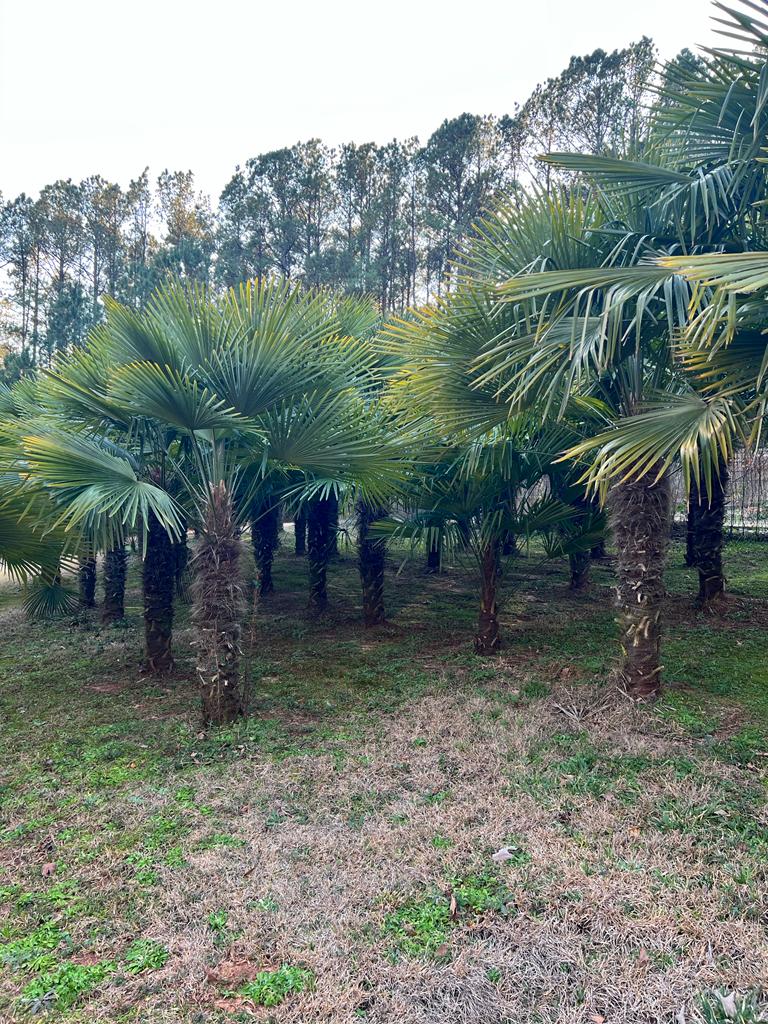
Our Ocala farm is just over an hour away, and we provide:
• Professional installation with a one-year warranty
• Free design visualization
• HOA-ready plans
• Rare, premium specimens unavailable at big-box stores
Contact Iguana Palms
📞 (352) 234-43553
📧 hello@iguanapalms.com
🌐 iguanapalms.com
📍 8201 SW 27th Ave, Ocala, FL 34476
Serving Winter Garden, Windermere, Horizon West, Oakland, Ocoee, and surrounding communities.
Frequently Asked Questions
What is the best palm tree for Winter Garden, FL?
The Pindo Palm is the best all-around choice—completely freeze-proof, appropriately sized, and extremely low-maintenance. Sabal Palmetto suits larger properties, while Sylvester Palm delivers premium visual impact.
Can tropical plants and palm trees survive in Winter Garden, FL?
Not reliably. Hard freezes occur every 5–10 years. The January 2026 freeze reached 24°F in nearby areas. Queen Palms, Coconut Palms, and Arecas will eventually fail. Cold-hardy species are the only dependable option, such as the ones we sell at Iguana Palms- Pindo Palms, Sylvester Palms, and more.
How much maintenance do cold-hardy palms require
Annual trimming of dead fronds, 2–3 fertilizations per year, and regular watering during the first year. Once established, they are largely self-sufficient.
Do I need HOA approval to plant my palm trees in Winter Garden, FL?
In most communities, yes. Subdivisions like Hamlin, Watermark, and Stoneybrook West require approval. We provide all necessary documentation.
Why do Winter Garden homeowners choose Iguana Palms?
We grow our palms in Central Florida’s Zone 9—the same climate as Winter Garden—so every tree has experienced real freezes, not theoretical ratings.